
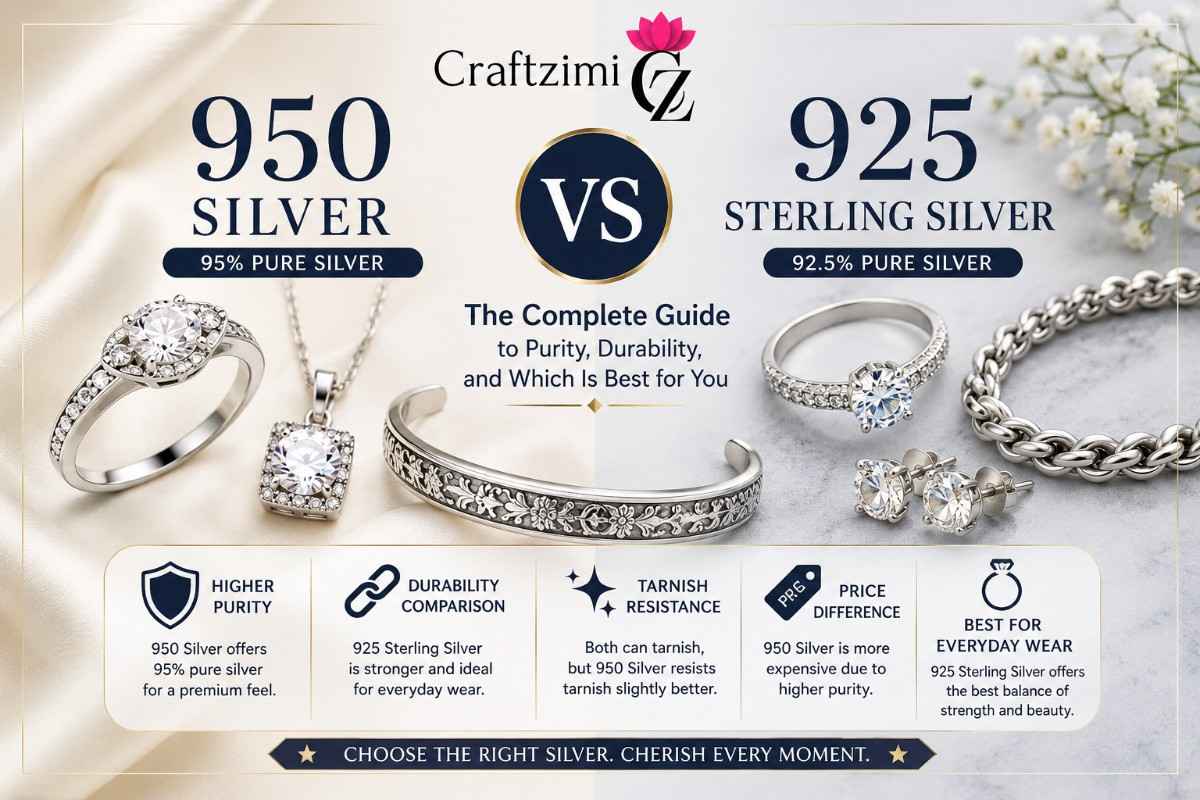
If you’re shopping for silver jewelry, you’ve probably come across both 950 silver and 925 sterling silver. At first glance, the numbers may seem confusing, but they represent different silver purity levels that directly affect durability, appearance, price, and long-term wear.
So, is 950 silver better than 925 sterling silver? The answer depends on how you plan to use the jewelry. While 950 silver contains more pure silver, 925 sterling silver is often considered the better choice for everyday jewelry because of its strength and durability.
In this guide, you’ll learn the difference between 950 silver and 925 sterling silver, compare their purity, durability, price, tarnish resistance, and discover which silver is best for rings, necklaces, earrings, and daily wear.
Quick Answer
925 sterling silver is generally better for everyday jewelry because it is more durable and scratch-resistant. 950 silver contains more pure silver and offers a premium appearance, making it ideal for luxury and handcrafted jewelry.
Quick Comparison: 950 Silver vs 925 Sterling Silver
If you’re wondering whether 950 silver or 925 sterling silver is the better choice, the table below highlights the key differences in purity, durability, tarnish resistance, and overall value.
| Feature | 950 Silver | 925 Sterling Silver |
|---|---|---|
| Silver Purity | 95% Pure Silver | 92.5% Pure Silver |
| Alloy Content | 5% Other Metals | 7.5% Other Metals |
| Durability | Moderate | High |
| Tarnish Resistance | Better | Good |
| Price | Higher | More Affordable |
| Everyday Wear | Good | Excellent |
| Softness | Softer | Harder |
| Jewelry Availability | Less Common | Most Common |
While 950 silver contains a higher percentage of pure silver, 925 sterling silver is generally preferred for everyday jewelry because it offers a stronger balance between purity and durability. Understanding these differences can help you choose the best silver purity for your jewelry needs.
Why Jewelry Buyers Trust Craftzimi
Craftzimi helps jewelry lovers make smarter buying decisions by providing expert guides, jewelry comparisons, authenticity tips, and recommendations for quality jewelry pieces.
- Learn how to identify authentic silver and gold jewelry
- Discover the best jewelry pieces for different budgets and styles
- Compare jewelry materials, gemstones, and precious metals
- Get honest buying advice before making a purchase
- Find trusted jewelry brands and reliable places to shop
Whether you’re looking for an everyday silver ring, a meaningful gift, or a timeless jewelry investment, Craftzimi is here to help you choose jewelry with confidence.
What Is 950 Silver?
950 silver is a high-purity silver alloy that contains 95% pure silver and 5% strengthening metals, such as copper or other alloys. The number “950” refers to the silver purity level, meaning that out of every 1,000 parts, 950 parts are pure silver.
Because of its higher silver content, 950 silver is often used in premium silver jewelry, artisan-crafted pieces, and luxury collections. Many jewelry enthusiasts appreciate its bright white appearance, rich luster, and higher purity compared to standard sterling silver.
Although 950 silver offers a more refined look, it is slightly softer than 925 sterling silver, making it less resistant to scratches and daily wear.
Understanding 950 Silver Purity
The purity of silver directly affects its appearance, durability, and value. Since 950 silver contains 95% pure silver, it is considered a higher-purity silver alloy than traditional sterling silver.
Some key characteristics of 950 silver include:
- Contains 95% pure silver and 5% alloy metals
- Offers a brighter and more luxurious silver appearance
- Often used in handcrafted and premium silver jewelry
- Higher silver content can increase its market value
- Generally softer than 925 sterling silver
- Suitable for collectors and those seeking high-purity silver jewelry
For buyers who prioritize silver purity and elegance, 950 silver is often seen as a premium alternative to standard sterling silver.
950 Silver Hallmark Meaning
One of the easiest ways to identify genuine 950 silver jewelry is by checking the hallmark. A hallmark is a small stamp placed on jewelry that indicates its metal purity and authenticity.
When you see a “950” stamp, it means the piece contains 95% pure silver. This hallmark helps buyers verify that they are purchasing authentic high-purity silver jewelry rather than silver-plated or lower-quality alternatives.
Common 950 silver hallmarks include:
- 950
- Ag950
- Silver 950
- S950
Professional jewelers use these hallmarks, along with testing methods such as acid testing and XRF analysis, to confirm silver purity. When purchasing premium silver jewelry, always look for a clear hallmark and buy from trusted sellers to ensure authenticity.
Still Deciding Between 925 and 950 Silver?
Understanding the differences between silver purity levels can help you make a smarter jewelry purchase. If you’re wondering which option offers the best balance of durability, value, and long-term beauty, don’t miss our detailed comparison guide.
👉 Which is Better: 925 or 950 Silver for Jewelry? Complete Buyer’s Guide
In this comprehensive guide, you’ll learn how 925 sterling silver and 950 silver compare in terms of purity, durability, tarnish resistance, pricing, and everyday wear—helping you choose the perfect silver jewelry for your needs.
What Is 925 Sterling Silver?
925 sterling silver is the most popular and widely used silver alloy in the jewelry industry. It contains 92.5% pure silver and 7.5% other metals, typically copper, which helps improve the metal’s strength and durability.
The term “925” refers to the purity level of the silver. Out of every 1,000 parts, 925 parts are pure silver, while the remaining 75 parts consist of strengthening metals. This combination creates a balance between beauty and durability, making sterling silver ideal for everyday jewelry.
From rings and earrings to necklaces and bracelets, 925 sterling silver has become the industry standard because it offers the elegant appearance of real silver while being strong enough for regular wear.
Understanding Sterling Silver Purity
Pure silver is naturally soft and can bend, scratch, or lose its shape over time. To make silver suitable for jewelry, manufacturers combine it with small amounts of other metals.
Key characteristics of 925 sterling silver include:
- Contains 92.5% pure silver
- Includes 7.5% strengthening metals, usually copper
- Stronger than higher-purity silver alloys
- Suitable for daily wear jewelry
- More resistant to bending and scratches
- Trusted standard in the global jewelry industry
Because of its excellent balance of purity and durability, sterling silver remains one of the best silver purity options for jewelry buyers seeking both quality and value.
Why Is Sterling Silver So Popular?
The popularity of 925 sterling silver comes from its ability to combine beauty, strength, and affordability. It offers many of the benefits of high-purity silver while remaining practical for everyday use.
Excellent Durability
One of the biggest advantages of sterling silver is its durability. The added alloy metals make it significantly stronger than higher-purity silver options such as 950 silver or 999 fine silver.
This increased strength helps jewelry withstand daily activities, reducing the risk of bending, dents, and scratches.
Affordable Luxury
Sterling silver provides the look and feel of genuine silver jewelry without the higher cost associated with premium silver alloys. This makes it a popular choice for buyers who want elegant jewelry at a reasonable price.
Easy Maintenance
With regular cleaning and proper storage, sterling silver can maintain its shine for many years. Simple care routines can help prevent tarnish and keep jewelry looking beautiful.
Widely Available
Because it is the industry standard, 925 sterling silver is available in a vast range of jewelry styles and designs. Whether you’re shopping for rings, earrings, necklaces, or bracelets, you’ll find more options in sterling silver than in most other silver purities.
950 Silver vs 925 Sterling Silver: Key Differences
Although both metals contain a high percentage of pure silver, there are several important differences that affect their appearance, durability, price, and suitability for everyday wear.
Silver Purity Comparison
The most obvious difference between 950 silver and 925 sterling silver is their silver content.
- 950 silver contains 95% pure silver
- 925 sterling silver contains 92.5% pure silver
While the difference may seem small, it affects the metal’s softness, appearance, and overall performance.
Because 950 silver contains more pure silver, it often has a slightly brighter and more luxurious appearance. However, the additional purity also makes it softer and less durable than sterling silver.
For most jewelry buyers, the purity difference is not noticeable during everyday wear, but it can influence the value and feel of the jewelry.
Durability and Strength
When comparing durability, 925 sterling silver has a clear advantage.
The extra alloy content helps strengthen the metal, making it more resistant to:
- Scratches
- Bending
- Dents
- Everyday wear and tear
950 silver contains less alloy metal and more pure silver, which makes it softer by nature. As a result, it may develop scratches or minor wear marks more easily over time.
If you’re looking for the best silver for daily wear, sterling silver is generally the more practical choice.
Appearance and Shine
Many jewelry enthusiasts choose 950 silver because of its premium appearance.
Since it contains a higher percentage of pure silver, it often offers:
- A brighter white color
- Enhanced natural luster
- A more luxurious appearance
- Greater visual purity
925 sterling silver also has an attractive shine, but its slightly higher alloy content can make the brightness marginally less intense.
For most people, the difference is subtle, but those seeking high-purity silver jewelry may prefer the appearance of 950 silver.
Tarnish Resistance
Does 950 Silver Tarnish?
A common question among buyers is whether 950 silver tarnishes over time.
The simple answer is yes. Like all real silver jewelry, both 950 silver and 925 sterling silver can tarnish when exposed to air, moisture, sulfur compounds, cosmetics, and environmental pollutants.
However, because 950 silver contains a higher percentage of pure silver and fewer alloy metals, it may tarnish slightly slower than 925 sterling silver.
Even so, neither metal is completely tarnish-proof.
To keep your silver jewelry looking its best:
- Store it in a dry place
- Use anti-tarnish pouches
- Avoid exposure to chemicals
- Clean regularly with a soft polishing cloth
With proper care, both 950 silver and 925 sterling silver can maintain their beauty for many years.
Price Comparison
Why Is 950 Silver More Expensive?
One of the biggest differences between 950 silver and 925 sterling silver is the price.
950 silver generally costs more because it contains a higher percentage of pure silver. Since silver is the most valuable component of the alloy, increasing the purity naturally raises production costs.
Several factors contribute to the higher price of 950 silver:
- Greater silver content
- Premium positioning in the jewelry market
- Higher manufacturing and craftsmanship costs
- Lower production volumes
- Increased material value
925 sterling silver is typically more affordable because it uses slightly less pure silver and is produced on a much larger scale.
For buyers seeking the best balance between quality and value, sterling silver often delivers the strongest overall investment. However, those who prioritize silver purity and luxury may find the additional cost of 950 silver worthwhile.
950 Silver vs 925 Sterling Silver for Jewelry
Choosing between 950 silver and 925 sterling silver often depends on the type of jewelry you plan to wear. While both are genuine silver alloys, their differences in purity and durability can make one option better suited for certain jewelry pieces.
Let’s compare how each silver performs in rings, earrings, necklaces, pendants, and bracelets.
Which Is Better for Rings?
Rings experience more daily wear than almost any other type of jewelry. They regularly come into contact with hard surfaces, water, lotions, and everyday activities.
Because of this constant exposure, durability becomes a major factor when choosing silver purity.
Daily Wear Considerations
925 sterling silver is generally the preferred choice for rings because it contains more strengthening alloys, making it more resistant to daily wear and tear.
950 silver, while higher in purity, is slightly softer and may develop scratches more quickly over time.
Scratch Resistance
When it comes to scratch resistance, sterling silver has a clear advantage.
- 925 sterling silver is harder and more durable
- 950 silver is softer due to its higher silver content
- Frequent wear can lead to visible surface marks on softer silver alloys
For people who wear rings every day, durability often outweighs the small increase in purity.
Best Choice for Engagement and Fashion Rings
For engagement rings, promise rings, and everyday fashion rings, 925 sterling silver is usually the better option because it offers:
- Better durability
- Greater resistance to scratches
- Improved long-term performance
- Lower maintenance requirements
However, if you’re purchasing a premium handcrafted ring that is worn occasionally, 950 silver can provide a more luxurious appearance and higher silver purity.
Which Is Better for Earrings?
Earrings generally experience less physical stress than rings or bracelets, making purity and appearance more important factors.
Weight and Comfort
The difference in weight between 950 silver and 925 sterling silver is minimal and usually unnoticeable during everyday wear.
Both metals provide excellent comfort for earrings, whether you choose studs, hoops, or drop earrings.
Appearance
Since earrings are often chosen for their visual appeal, many jewelry lovers appreciate the brighter appearance of 950 silver.
Benefits of 950 silver earrings include:
- Higher silver purity
- Enhanced natural luster
- Premium appearance
- Elegant finish
For buyers focused on aesthetics rather than maximum durability, 950 silver can be an attractive choice for earrings.
Which Is Better for Necklaces and Pendants?
Necklaces and pendants are typically subjected to less impact than rings and bracelets, allowing buyers to focus more on style and personal preference.
Durability Requirements
Because necklaces rarely experience significant friction or pressure, both 950 silver and 925 sterling silver perform well.
However, sterling silver chains may provide additional strength, especially for delicate chain designs.
Styling Preferences
Your choice often comes down to appearance and budget.
Choose 950 silver if you prefer:
- Higher silver purity
- Premium handcrafted jewelry
- Brighter silver color
- Luxury designs
Choose 925 sterling silver if you prefer:
- Greater durability
- More design options
- Better affordability
- Everyday versatility
Which Is Better for Bracelets?
Bracelets are constantly exposed to movement, friction, and accidental impacts throughout the day.
This makes durability one of the most important considerations.
Frequent Impact and Friction
Bracelets frequently rub against:
- Desks
- Clothing
- Watches
- Hard surfaces
Because of this, softer silver alloys can develop scratches more easily.
Recommended Purity for Bracelets
For most buyers, 925 sterling silver is the recommended choice because it offers:
- Better durability
- Greater scratch resistance
- Improved structural strength
- Longer-lasting appearance
While 950 silver bracelets can look beautiful, they may require more careful handling and maintenance.
950 Silver vs 925 Sterling Silver vs 999 Silver
Many buyers also compare 950 silver and 925 sterling silver with 999 fine silver, which contains almost pure silver.
The table below highlights the main differences.
| Feature | 950 Silver | 925 Sterling Silver | 999 Fine Silver |
|---|---|---|---|
| Silver Purity | 95% Pure Silver | 92.5% Pure Silver | 99.9% Pure Silver |
| Durability | Good | Excellent | Poor |
| Scratch Resistance | Moderate | High | Low |
| Everyday Wear | Good | Best Choice | Limited |
| Tarnish Resistance | Better | Good | Excellent |
| Price Range | High | Moderate | Highest |
| Jewelry Strength | Moderate | Strong | Very Soft |
| Best For | Premium Jewelry | Daily Wear Jewelry | Investment & Collectibles |
| Common Uses | Artisan Rings, Luxury Jewelry, Handcrafted Pieces | Rings, Necklaces, Earrings, Bracelets | Silver Bars, Coins, Special Occasion Jewelry |
| Availability | Less Common | Most Common | Limited |
| Overall Value | Premium Purity | Best Balance of Purity & Durability | Highest Silver Content |
Quick Summary:
- 950 Silver is ideal for buyers who want higher silver purity and a premium appearance.
- 925 Sterling Silver offers the best combination of durability, affordability, and everyday practicality.
- 999 Fine Silver contains the highest amount of pure silver but is generally too soft for regular jewelry wear and is more commonly used for investment-grade silver products.
Which Silver Purity Is Best for Jewelry?
The best silver purity depends on how you plan to use the jewelry.
Best Silver for Daily Wear
For everyday jewelry, 925 sterling silver is usually the best choice.
Its combination of purity and durability makes it ideal for:
- Rings
- Bracelets
- Necklaces
- Earrings
- Daily fashion jewelry
Most professional jewelers consider sterling silver the best silver purity for daily wear because it withstands regular use without sacrificing appearance.
Best Silver for Investment
If your primary goal is silver value rather than jewelry durability, 999 fine silver is often preferred.
Because it contains 99.9% pure silver, it is commonly used for:
- Silver bars
- Bullion
- Investment coins
- Collectible silver products
However, its softness makes it less practical for frequently worn jewelry.
Best Silver for Premium Collections
For luxury jewelry enthusiasts and collectors, 950 silver offers an attractive middle ground.
It provides:
- Higher silver purity than sterling silver
- Better durability than 999 fine silver
- Premium craftsmanship appeal
- Elegant, high-end appearance
This makes 950 silver a popular choice for artisan jewelry, handcrafted collections, and premium silver accessories.
Quick Recommendation
- Choose 925 sterling silver for everyday wear and maximum durability.
- Choose 950 silver for premium jewelry and higher silver purity.
- Choose 999 fine silver for investment purposes and collectible pieces.
For most jewelry buyers, 925 sterling silver remains the most practical and versatile option, while 950 silver appeals to those seeking luxury and higher purity.
Pros and Cons of 950 Silver
950 silver is often chosen by buyers who value higher silver purity and a more luxurious appearance. However, like any precious metal, it comes with both advantages and disadvantages.
Understanding the pros and cons of 950 silver can help you decide whether it is the right choice for your jewelry needs.
Advantages of 950 Silver
Higher Silver Purity
One of the biggest benefits of 950 silver is its high silver content. Containing 95% pure silver, it offers greater purity than standard 925 sterling silver.
For buyers who prioritize precious metal content, 950 silver is often viewed as a premium silver alloy.
Premium Appearance
Because of its higher silver purity, 950 silver typically has a brighter white color and a more refined finish.
Many jewelry enthusiasts appreciate its:
- Rich natural luster
- Elegant appearance
- High-end aesthetic appeal
- Premium craftsmanship look
This makes it a popular choice for luxury silver jewelry and artisan-made collections.
Better Tarnish Resistance
A common question buyers ask is whether 950 silver tarnishes.
While all real silver can tarnish over time, 950 silver generally tarnishes more slowly than 925 sterling silver because it contains fewer alloy metals that react with air and moisture.
With proper care and storage, 950 silver jewelry can maintain its shine for a long time.
Luxury Appeal
950 silver is often associated with premium jewelry collections and handcrafted designs.
Its higher silver content gives it a sense of exclusivity that appeals to collectors and buyers seeking high-purity silver jewelry.
Disadvantages of 950 Silver
More Expensive
Since 950 silver contains more pure silver, it typically costs more than sterling silver.
The higher material value, combined with premium craftsmanship, often results in higher retail prices.
Softer Metal
Greater silver purity also means increased softness.
Compared to sterling silver, 950 silver is less resistant to bending, dents, and everyday wear.
Can Scratch More Easily
Because it is softer, 950 silver can develop surface scratches more quickly, especially when worn daily.
For jewelry that experiences frequent impact, such as rings and bracelets, buyers should consider whether purity or durability is their priority.
Pros and Cons of 925 Sterling Silver
925 sterling silver is the most widely used silver alloy in the jewelry industry. It offers an excellent balance between beauty, durability, and affordability, making it a favorite among both jewelers and consumers.
Advantages of 925 Sterling Silver
Excellent Durability
One of the main reasons sterling silver is so popular is its strength.
The additional alloy metals help make it:
- More scratch-resistant
- More durable for everyday wear
- Less prone to bending
- Better suited for active lifestyles
This durability makes sterling silver one of the best choices for daily wear jewelry.
Budget-Friendly
Compared to higher-purity silver alloys, sterling silver is generally more affordable.
Buyers can enjoy the appearance of genuine silver jewelry without paying premium prices.
This makes it an excellent option for those seeking value for money.
Widely Available
Since 925 sterling silver is the industry standard, it is available in virtually every jewelry category.
Popular options include:
- Rings
- Earrings
- Necklaces
- Bracelets
- Pendants
- Customized jewelry
The wide availability also provides buyers with more style choices and price ranges.
Ideal for Everyday Jewelry
For people who wear jewelry daily, sterling silver is often the most practical choice.
Its combination of purity, durability, and affordability makes it suitable for:
- Engagement rings
- Fashion jewelry
- Office wear
- Casual accessories
- Everyday silver collections
Disadvantages of 925 Sterling Silver
Slightly Lower Silver Content
Compared to 950 silver and 999 fine silver, sterling silver contains less pure silver.
Although the difference is relatively small, buyers seeking the highest silver purity may prefer 950 silver.
May Tarnish Faster Than 950 Silver
Because sterling silver contains a higher percentage of alloy metals, it can tarnish more quickly when exposed to:
- Air
- Humidity
- Sulfur compounds
- Cosmetics
- Household chemicals
Fortunately, regular cleaning and proper storage can easily keep sterling silver jewelry looking bright and beautiful.
Quick Verdict
Choose 950 Silver If:
- You want higher silver purity.
- You prefer premium silver jewelry.
- Luxury appearance matters most.
- You don’t mind paying more for higher purity.
Choose 925 Sterling Silver If:
- You need durable everyday jewelry.
- Scratch resistance is important.
- You want better value for money.
- You prefer a wider range of jewelry designs.
For most jewelry buyers, 925 sterling silver offers the best balance of durability, affordability, and beauty, while 950 silver appeals to those who prioritize purity and premium craftsmanship.
How to Identify Genuine 950 and 925 Silver
Whether you’re buying a silver ring, necklace, bracelet, or earrings, verifying authenticity is essential. Knowing how to identify genuine 950 silver and 925 sterling silver can help you avoid silver-plated products and ensure you’re getting real silver jewelry worth your money.
Fortunately, there are several reliable ways to check silver purity before making a purchase.
Check the Hallmark
The easiest way to identify authentic silver jewelry is by examining the hallmark stamp. A hallmark is a small marking placed on jewelry to indicate its metal purity.
950 Silver Hallmark
If a piece is made from 950 silver, you may find markings such as:
- 950
- Ag950
- Silver 950
- S950
These hallmarks indicate that the jewelry contains 95% pure silver.
925 Sterling Silver Hallmark
Sterling silver jewelry commonly carries one of the following stamps:
- 925
- Sterling
- Sterling Silver
- S925
- Ag925
These marks confirm that the jewelry contains 92.5% pure silver and meets sterling silver standards.
When shopping online or in-store, always check product photos and descriptions for silver hallmarks before purchasing.
Perform a Magnet Test
Silver is not magnetic. A simple magnet test can help you identify obvious fake silver jewelry.
To perform the test:
- Hold a strong magnet close to the jewelry.
- Observe whether the piece is attracted to the magnet.
- Genuine silver should show little to no magnetic reaction.
Keep in mind that the magnet test is not completely foolproof because some non-silver metals are also non-magnetic. It should be used as a preliminary authenticity check rather than a final confirmation.
Consider Professional Silver Testing
If you’re purchasing expensive or high-purity silver jewelry, professional testing offers the most accurate results.
Jewelers commonly use:
- Acid testing
- Electronic silver testing
- X-ray fluorescence (XRF) analysis
- Precious metal verification equipment
These methods can accurately determine whether a piece is genuine 950 silver, 925 sterling silver, or another silver alloy.
Purchase From Trusted Sellers
One of the best ways to ensure silver authenticity is to buy from reputable jewelry brands and trusted silver jewelry sellers.
Before purchasing, look for:
- Clear silver purity information
- Authentic hallmark stamps
- Product certifications
- Customer reviews
- Transparent return policies
Buying from established sellers significantly reduces the risk of receiving fake or silver-plated jewelry.
Is 950 Silver Worth the Extra Cost?
One of the most common questions buyers ask is whether 950 silver is worth paying more for compared to 925 sterling silver.
The answer depends on what matters most to you: higher silver purity or greater durability.
Who Should Buy 950 Silver?
950 silver may be the right choice if you:
- Prefer higher silver purity
- Appreciate premium silver jewelry
- Want a brighter, more luxurious appearance
- Collect artisan or handcrafted jewelry
- Value exclusivity and craftsmanship
Because it contains 95% pure silver, 950 silver appeals to buyers seeking high-purity silver jewelry and luxury silver collections.
Who Should Choose 925 Sterling Silver?
925 sterling silver is often the better choice for practical everyday use.
You may prefer sterling silver if you:
- Wear jewelry every day
- Need better scratch resistance
- Want stronger and more durable jewelry
- Prefer a wider range of styles
- Want the best balance between quality and price
For most jewelry buyers, sterling silver provides excellent value without sacrificing appearance.
Cost-to-Value Comparison
When comparing 950 silver vs 925 sterling silver, the price difference mainly comes from silver purity and production costs.
| Factor | 950 Silver | 925 Sterling Silver |
|---|---|---|
| Silver Content | Higher | Slightly Lower |
| Purchase Price | Higher | More Affordable |
| Durability | Moderate | Excellent |
| Luxury Appeal | High | Moderate |
| Everyday Practicality | Good | Excellent |
| Overall Value | Premium Choice | Best Value |
If your goal is maximum durability and everyday wearability, 925 sterling silver often delivers better overall value.
If silver purity and luxury appeal are your top priorities, 950 silver may justify its higher price.
Which Silver Should You Buy?
After comparing purity, durability, appearance, tarnish resistance, and cost, the best choice depends on your personal preferences and how you plan to wear your jewelry.
Choose 950 Silver If:
950 silver may be the better option if:
- You prefer higher silver purity
- You want premium silver jewelry
- You appreciate handcrafted designs
- Appearance and luxury matter most
- You are comfortable paying more for higher silver content
This option is particularly attractive for collectors and buyers seeking high-end silver jewelry.
Frequently Asked Questions
Is 950 silver real silver?
Yes, 950 silver is real silver. It contains 95% pure silver and 5% alloy metals, making it a high-purity silver alloy. The “950” hallmark indicates that 950 parts out of 1,000 are pure silver, which is higher than the 92.5% purity found in sterling silver.
Is 950 silver better than 925 sterling silver?
950 silver is better for buyers who want higher silver purity and a premium appearance, while 925 sterling silver is better for durability and everyday wear. The best choice depends on whether you prioritize purity or strength in your jewelry.
Does 950 silver turn black?
Yes, 950 silver can turn black over time due to tarnishing. Although it contains more pure silver than 925 sterling silver, it can still react with sulfur, moisture, and air pollutants. Regular cleaning and proper storage help prevent tarnish and maintain its shine.
Why is 950 silver more expensive?
950 silver is more expensive because it contains a higher percentage of pure silver. Its premium purity, increased material value, and use in luxury or handcrafted jewelry often result in higher production costs and retail prices compared to 925 sterling silver.
Can you wear 950 silver every day?
Yes, you can wear 950 silver every day. However, because it is softer than 925 sterling silver, it may develop scratches more easily with frequent use. For daily wear jewelry, many buyers prefer sterling silver due to its greater durability.
Which silver lasts longer?
925 sterling silver generally lasts longer than 950 silver because it is harder and more resistant to scratches, dents, and everyday wear. While both can last for decades with proper care, sterling silver is often considered the best silver for long-term daily use.
Is 950 silver suitable for rings?
Yes, 950 silver is suitable for rings, especially premium or occasional-wear pieces. However, because it is softer than 925 sterling silver, it may show wear more quickly. For engagement rings and everyday fashion rings, sterling silver is usually the more durable option.
How can I tell if my silver is 950 or 925?
You can tell whether your silver is 950 or 925 by checking the hallmark stamp. Genuine 950 silver is usually marked “950,” “Ag950,” or “S950,” while sterling silver is commonly stamped “925,” “Ag925,” or “Sterling.” Professional testing can provide additional confirmation if needed.
Final Verdict: 950 Silver vs 925 Sterling Silver
After comparing purity, durability, tarnish resistance, appearance, and price, it’s clear that both 950 silver and 925 sterling silver offer unique benefits for jewelry lovers.
950 silver stands out for its higher silver purity, brighter appearance, and premium appeal. With 95% pure silver content, it is an excellent choice for buyers who appreciate luxury silver jewelry, artisan craftsmanship, and high-purity silver pieces.
925 sterling silver, however, remains the most popular silver alloy for jewelry because it offers exceptional durability, better scratch resistance, and outstanding value for money. Its balance of purity and strength makes it ideal for rings, bracelets, necklaces, earrings, and other everyday accessories.
Which Silver Is Right For You?
✔ Choose 950 Silver if:
- You want higher silver purity
- You love luxury jewelry
- Premium appearance matters most
✔ Choose 925 Sterling Silver if:
- You wear jewelry daily
- You need better durability
- You want the best value for money
Tell Us Your Choice
Would you choose higher purity or better durability?
Discover Quality Silver Jewelry at Craftzimi
At Craftzimi, we believe that choosing the right silver jewelry is about finding the perfect combination of beauty, quality, and lasting value. Whether you prefer the premium purity of 950 silver or the everyday durability of 925 sterling silver, understanding the differences helps you make a confident buying decision.
Both silver types can be beautiful additions to your jewelry collection when properly cared for. The best choice ultimately depends on your lifestyle, budget, and personal style preferences.
For most buyers, 925 sterling silver offers the ideal balance of beauty, durability, and affordability, while 950 silver remains an excellent option for those seeking higher purity and a more premium jewelry experience.