
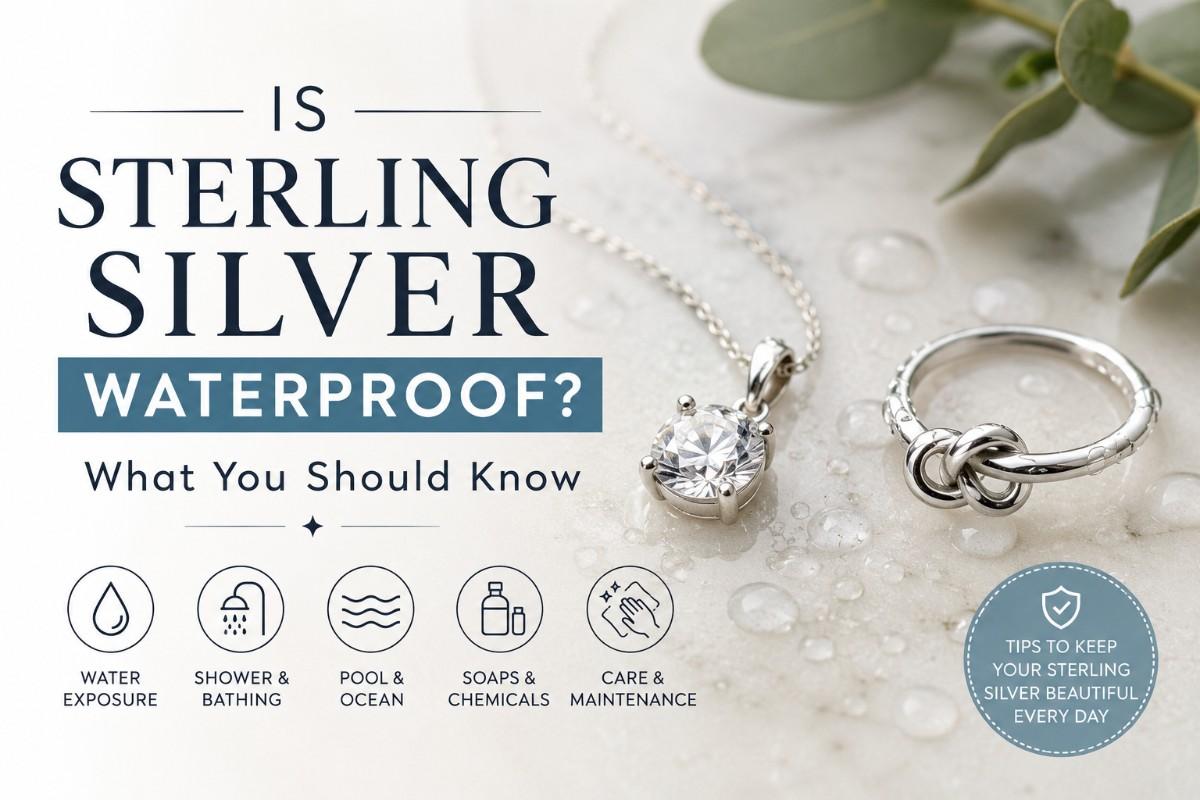
Sterling silver is a timeless jewelry choice, but one of the most common questions buyers ask is: Is sterling silver waterproof? The short answer is no. While 925 sterling silver can handle occasional contact with water, it is not completely waterproof. Frequent or prolonged exposure to moisture can speed up tarnishing and reduce its brilliant shine.
If you wear sterling silver jewelry every day, understanding how water affects it can help you keep your favorite pieces looking beautiful for years.
Is Sterling Silver Waterproof?
No, sterling silver is not waterproof.
Sterling silver is made of 92.5% pure silver and 7.5% other metals, usually copper. While pure silver is relatively resistant to corrosion, the copper in sterling silver reacts with moisture, oxygen, and certain chemicals. Over time, this reaction causes oxidation, which appears as the dark layer commonly known as tarnish.
Some sterling silver jewelry is coated with protective finishes such as gold plating, rhodium plating, or other metal coatings. These coatings provide a temporary barrier against moisture, helping the jewelry resist water better than uncoated sterling silver.
However, they do not make the jewelry completely waterproof. As the plating gradually wears away through regular use, the underlying sterling silver becomes exposed and can tarnish when repeatedly exposed to water.
The good news is that getting your jewelry wet once in a while won’t instantly damage it. The key is how long it stays wet and what type of water it comes into contact with. Drying your jewelry thoroughly after exposure to water will help preserve its shine and extend its lifespan.
Waterproof Sterling Silver Jewellery You May Like
Here are some 14K gold-plated sterling silver jewelry pieces with a protective coating that makes them more water-resistant –


What Happens When Sterling Silver Gets Wet?
Occasional exposure to clean water usually won’t ruin sterling silver. However, if moisture remains on the jewelry for long periods, oxidation speeds up, making the metal lose its bright finish.
Water itself isn’t always the biggest problem. Minerals, chemicals, sweat, soaps, and salt can all contribute to faster tarnishing.
In most cases, simply drying your jewelry immediately after it gets wet helps prevent unnecessary discoloration.
Fresh Water vs. Chemical Exposure
Not all water affects sterling silver in the same way.
Fresh Water
Fresh water from rain or a quick shower generally isn’t harmful if you dry your jewelry immediately afterward.
However, keep in mind that:
- Hard water contains minerals that may leave dull deposits.
- Soap residue can reduce silver’s natural shine.
- Moisture left on the surface encourages tarnishing.
If your sterling silver gets wet with clean water, simply dry it thoroughly with a soft cloth.
Chlorinated Water
Swimming pools and hot tubs contain chlorine, which is much harsher on sterling silver.
Chlorine can:
- Speed up oxidation
- Cause pitting on the surface
- Lead to permanent discoloration
- Damage polished finishes
Always remove sterling silver jewelry before entering chlorinated water.
Salt Water
Ocean water is even more damaging than fresh water.
Salt accelerates corrosion and may permanently affect the metal’s appearance if exposure is frequent.
It’s best to remove rings, bracelets, necklaces, and earrings before swimming in the sea.
Shampoos, Soaps, Lotions, and Perfumes
Many personal care products contain chemicals that leave residues on sterling silver.
These products may:
- Speed up tarnishing
- Reduce shine
- Affect protective coatings on rhodium-plated sterling silver
- Make cleaning more difficult over time
Apply lotions, sunscreen, perfumes, and cosmetics before putting on your jewelry whenever possible.
Can You Shower with Sterling Silver?
Technically, yes—but it isn’t recommended.
An occasional shower is unlikely to permanently damage quality sterling silver. However, repeated exposure to:
- Soap
- Shampoo
- Conditioner
- Hard water minerals
can gradually dull the finish and increase tarnishing.
For maximum longevity, remove your sterling silver before showering.
Can You Wash Your Hands While Wearing Sterling Silver?
Yes, but it’s still a good idea to remove rings whenever possible.
Frequent handwashing exposes silver to:
- Soap
- Moisture
- Hand sanitizers
- Cleaning chemicals
If you do wash your hands while wearing sterling silver, dry both your hands and your jewelry thoroughly afterward.
How to Care for Sterling Silver After It Gets Wet
Proper care only takes a few minutes and can significantly extend the life of your jewelry.
Dry It Immediately
Use a clean microfiber cloth or a soft jewelry polishing cloth to gently pat your sterling silver dry.
Avoid paper towels or rough fabrics that may scratch the surface.
Clean It Regularly
If your jewelry has been exposed to water, sweat, or everyday oils, wipe it with a silver polishing cloth.
Regular cleaning helps remove moisture, oils, and residues before tarnish develops.
Store It Properly
Once completely dry, store sterling silver in:
- An airtight jewelry pouch
- A lined jewelry box
- Anti-tarnish storage bags
- Containers with anti-tarnish strips
Limiting exposure to air and humidity slows oxidation considerably.
Remove It During Household Tasks
To reduce unnecessary exposure to moisture and chemicals, remove sterling silver before:
- Washing dishes
- Cleaning your home
- Cooking
- Gardening
- Swimming
- Exercising heavily
These simple habits greatly reduce tarnishing.
Tips to Keep Sterling Silver Looking New
Follow these simple habits to maintain your jewelry’s shine:
- Dry jewelry immediately after it gets wet.
- Keep it away from chlorine and salt water.
- Apply perfumes and lotions before wearing jewelry.
- Clean it regularly with a silver polishing cloth.
- Store it in a dry, airtight container.
- Remove jewelry before household chores and swimming.
Consistent care helps preserve both the beauty and longevity of sterling silver.
Common Myths About Sterling Silver and Water
| Myth | Reality |
|---|---|
| Sterling silver is completely waterproof. | It is water-resistant but not waterproof. |
| Fresh water instantly ruins sterling silver. | Brief exposure to clean water is generally safe if dried immediately. |
| Tarnished silver is permanently damaged. | Most tarnish can be safely removed with proper silver cleaning methods. |
| Swimming with sterling silver is harmless. | Chlorine and salt water can cause permanent damage over time. |
Final Thoughts
Although sterling silver isn’t waterproof, there’s no need to worry if it occasionally gets wet. Clean water alone won’t instantly damage your jewelry, but repeated exposure to moisture, chlorine, salt water, and everyday chemicals can accelerate tarnishing and reduce its shine.
The best way to protect your sterling silver is to dry it immediately after it gets wet, clean it regularly, store it properly, and remove it before swimming or using harsh household products. With proper care, your sterling silver jewelry can maintain its brilliance and beauty for many years.
Frequently Asked Questions About Sterling Silver and Water
Is sterling silver waterproof?
No, sterling silver is not waterproof. While it can tolerate occasional contact with clean water, prolonged exposure to moisture can accelerate tarnishing because of the copper content in the alloy.
Can I wear sterling silver in the shower?
It’s best not to. Soap, shampoo, hard water minerals, and repeated moisture exposure can dull the finish and increase tarnishing over time.
Does water permanently damage sterling silver?
Fresh water usually does not cause permanent damage if the jewelry is dried promptly. However, repeated exposure to chlorine, salt water, or harsh chemicals can lead to lasting discoloration or surface damage.
Can I swim with sterling silver jewelry?
No. Remove sterling silver before swimming in pools, hot tubs, or the ocean, as chlorine and salt water can corrode the metal and speed up tarnishing.
How should I dry sterling silver after it gets wet?
Gently pat it dry using a clean microfiber or silver polishing cloth. Make sure it is completely dry before storing it to reduce moisture-related tarnishing.