
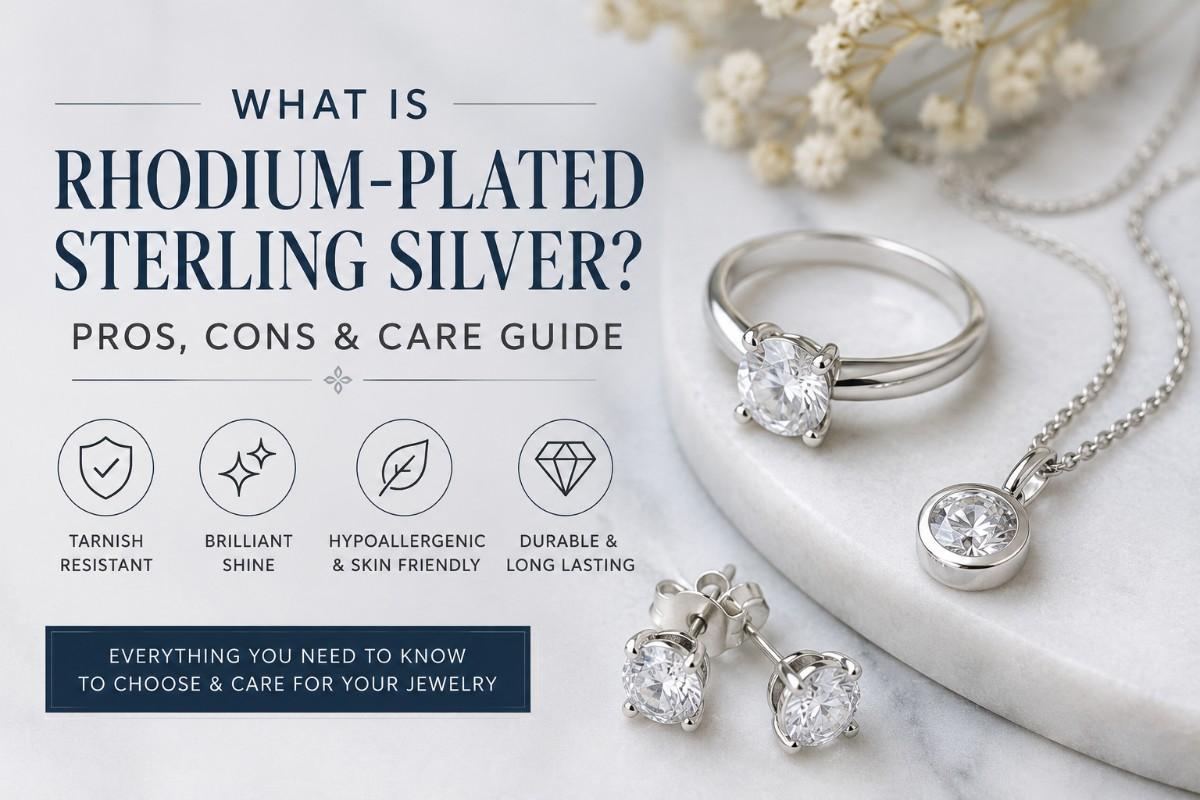
If you’ve ever wondered why some sterling silver jewelry looks exceptionally bright and stays shiny longer, the answer is often rhodium plating. Rhodium-plated sterling silver combines the affordability of sterling silver with the luxurious appearance and added protection of rhodium, one of the world’s rarest precious metals.
Whether you’re buying a ring, necklace, bracelet, or earrings, understanding rhodium plating can help you make a smarter purchase and properly care for your jewelry.
In this guide, you’ll learn what rhodium-plated sterling silver is, its advantages and disadvantages, how long it lasts, and the best ways to maintain its beautiful finish.
What Is Rhodium-Plated Sterling Silver?
Rhodium-plated sterling silver is 925 sterling silver coated with a microscopic layer of rhodium, a rare precious metal belonging to the platinum family.
This ultra-thin coating dramatically improves the jewelry’s appearance by giving it a brilliant, mirror-like white finish while also protecting the underlying silver.
Unlike standard sterling silver, which naturally tarnishes over time due to exposure to oxygen and moisture, rhodium-plated silver remains bright and lustrous for much longer because the rhodium acts as a protective barrier.
Why Is Rhodium Used?
Rhodium is prized because it is:
- Extremely reflective
- Highly resistant to corrosion
- Harder than silver
- Naturally hypoallergenic
- One of the rarest precious metals in the world
These qualities make it an ideal finishing layer for fine jewelry.
How Does Rhodium Plating Work?
The plating process involves electroplating a microscopic layer of rhodium onto the surface of polished sterling silver.
Although the coating is incredibly thin, it creates a durable protective shell that:
- Prevents direct contact between air and silver
- Reduces tarnishing
- Improves brightness
- Adds slight scratch resistance
- Makes jewelry feel smoother and more luxurious
Because rhodium is expensive, only a very thin layer is applied.
Pros of Rhodium-Plated Sterling Silver
1. Excellent Tarnish Resistance
One of the biggest benefits is its ability to resist tarnishing.
Sterling silver naturally reacts with sulfur compounds in the air, creating a dark tarnished surface. Rhodium blocks this reaction, helping jewelry stay shiny for much longer.
Best for:
- Everyday jewelry
- Wedding rings
- Necklaces
- Earrings
2. Exceptional Mirror-Like Shine
Rhodium has an incredibly reflective surface that creates a brilliant white finish often compared to:
- White gold
- Platinum
- Freshly polished silver
Many people prefer its luxurious “liquid mirror” appearance over untreated sterling silver.
3. Hypoallergenic Protection
Sterling silver contains 92.5% silver and 7.5% alloy metals, usually copper.
In some jewelry, trace metals such as nickel may also be present depending on manufacturing.
The rhodium coating creates a barrier between your skin and these metals, making the jewelry much more comfortable for people with sensitive skin.
4. Better Scratch Resistance
Although rhodium plating doesn’t make jewelry scratch-proof, rhodium is harder than silver.
This added hardness helps reduce minor everyday surface scratches, allowing the jewelry to maintain its polished appearance longer.
Cons of Rhodium-Plated Sterling Silver
Like any jewelry finish, rhodium plating has a few drawbacks.
1. The Plating Doesn’t Last Forever
The rhodium coating is extremely thin.
With regular wear, friction gradually wears it away, especially on:
- Rings
- Bracelets
- Frequently worn necklaces
Eventually, the sterling silver underneath becomes visible.
2. Re-Plating Is Required
To maintain its bright appearance, most rhodium-plated jewelry requires professional re-plating.
Typical re-plating intervals range from:
- Every 6–12 months for rings worn daily
- Every 12–24 months for jewelry worn occasionally
The exact lifespan depends on wear frequency and lifestyle.
3. Uneven Fading
As the rhodium layer wears down, certain areas may fade faster than others.
This can create a patchy appearance where parts of the jewelry look brighter than the exposed sterling silver underneath.
Professional re-plating restores a uniform finish.
Rhodium-Plated vs Regular Sterling Silver
| Feature | Rhodium-Plated Sterling Silver | Regular Sterling Silver |
|---|---|---|
| Shine | Extremely bright, mirror-like | Soft natural silver glow |
| Tarnish Resistance | Excellent | Tarnishes over time |
| Hypoallergenic | Better due to protective coating | Usually good but depends on alloy |
| Maintenance | Requires occasional re-plating | Requires regular polishing |
| Scratch Resistance | Slightly better | Softer surface |
| Long-Term Care | Re-plating needed | Polishing needed |
How Long Does Rhodium Plating Last?
There is no universal lifespan because durability depends on:
- How often the jewelry is worn
- Skin chemistry
- Exposure to chemicals
- Friction
- Storage habits
On average:
- Daily rings: 6–12 months
- Earrings: 1–3 years
- Necklaces: 1–2 years
- Occasion jewelry: Several years
Proper care can significantly extend the life of the plating.
How to Care for Rhodium-Plated Sterling Silver
Proper care helps preserve the rhodium coating and delays the need for re-plating.
Clean Gently
Avoid abrasive silver polishes and ultrasonic cleaners, as they can wear away the rhodium layer.
Instead:
- Mix mild soap with warm water.
- Gently clean the jewelry.
- Rinse thoroughly.
- Dry with a soft, lint-free cloth.
Store Jewelry Properly
Keep each piece separate to prevent scratching.
Store your jewelry:
- In soft fabric pouches
- Inside a lined jewelry box
- Away from direct sunlight
- In a dry environment
Remove Before Activities
Take off rhodium-plated jewelry before:
- Swimming
- Showering
- Exercising
- Gardening
- Heavy manual work
Chlorine, sweat, and repeated friction can accelerate wear.
Avoid Chemicals
Keep jewelry away from:
- Perfumes
- Hair sprays
- Lotions
- Cleaning products
- Bleach
- Household chemicals
Apply cosmetics first and wear jewelry last.
Can Rhodium-Plated Sterling Silver Be Replated?
Yes.
Professional jewelers can remove any remaining worn plating, polish the sterling silver, and apply a fresh layer of rhodium.
Re-plating restores the jewelry’s original brilliance and protective finish, making older pieces look almost new again.
Is Rhodium-Plated Sterling Silver Worth Buying?
For many people, yes.
It’s an excellent choice if you want:
- Brilliant white shine
- Less frequent tarnishing
- Hypoallergenic jewelry
- Lower maintenance than untreated sterling silver
- An appearance similar to white gold at a more affordable price
If you don’t mind occasional professional re-plating, rhodium-plated sterling silver offers outstanding beauty and durability.
Frequently Asked Questions About Rhodium-Plated Sterling Silver
If you’re considering buying rhodium-plated sterling silver jewelry, you may have questions about its durability, maintenance, and value. Below are answers to some of the most commonly asked questions to help you better understand how rhodium plating works and how to keep your jewelry looking its best.
Does rhodium-plated sterling silver tarnish?
Not easily. The rhodium coating acts as a protective barrier that prevents the sterling silver underneath from reacting with air and moisture. Once the coating wears away, however, the exposed silver can begin to tarnish.
How long does rhodium plating last?
Most rhodium plating lasts between 6 and 24 months, depending on how often the jewelry is worn, exposure to chemicals, and daily friction. Jewelry worn occasionally may retain its finish for several years.
Can rhodium-plated sterling silver be polished?
Avoid traditional silver polishing compounds because they can remove the rhodium coating. Clean the jewelry gently with mild soap, warm water, and a soft lint-free cloth instead.
Is rhodium-plated sterling silver waterproof?
While brief exposure to water is generally safe, it’s best to remove rhodium-plated jewelry before swimming, showering, or soaking it. Chlorine, salt water, and frequent moisture can shorten the lifespan of the plating.
Is rhodium-plated sterling silver better than regular sterling silver?
It depends on your priorities. Rhodium-plated sterling silver offers superior shine, better tarnish resistance, and improved protection for sensitive skin, while regular sterling silver is easier to polish and doesn’t require periodic re-plating.
Final Thoughts
Rhodium-plated sterling silver combines the timeless beauty of sterling silver with the luxurious brilliance and added protection of rhodium. Its mirror-like shine, resistance to tarnishing, and hypoallergenic surface make it a popular choice for modern jewelry.
Although the plating naturally wears over time and eventually requires professional re-plating, proper care can significantly extend its lifespan. If you’re looking for jewelry that stays brighter for longer while offering a premium appearance without the cost of white gold or platinum, rhodium-plated sterling silver is an excellent investment.