
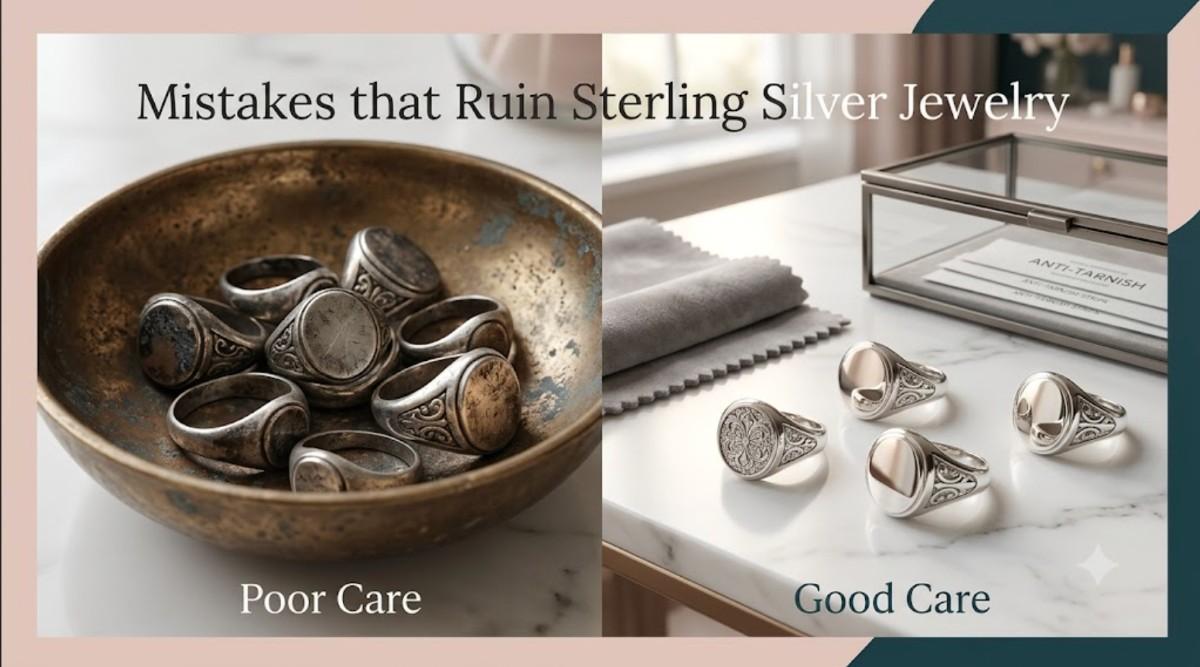
Sterling silver is a timeless, versatile metal that anchors many modern jewelry collections. Beloved for its luminous mirror finish, high-end appeal, and durability, 925 sterling silver is an alloy composed of 92.5% pure silver and 7.5% copper. While this copper blend gives silver the strength needed for intricate craftsmanship, it also renders the metal naturally reactive.
If you have ever opened your jewelry organizer to find a favorite ring dull, blackened, or covered in tiny surface scratches, you are not alone. Most damage to silver doesn’t happen from severe accidents; it stems from quiet, everyday errors during wear, storage, and cleaning.
To keep your favorite heirloom-quality pieces radiant for decades, avoid these common mistakes that ruin sterling silver jewelry.
1. Exposing Silver to Harsh Chemicals and Moisture
Sterling silver reacts swiftly when exposed to atmospheric sulfur, moisture, and synthetic chemicals. Over time, these elements convert pure silver into silver sulfide—the dark chemical layer known as tarnish.
Applying Beauty Products Over Your Jewelry
Spraying perfume, applying body lotions, or setting your hair while wearing silver is one of the fastest ways to destroy its shine. Beauty products contain harsh alcohols, synthetic fragrances, and sulfur compounds. When trapped against metal, these compounds form a sticky film that accelerates heavy tarnish buildup.
- The Fix: Adhere strictly to the golden styling rule: “Last on, first off.” Put your silver rings, necklaces, and earrings on after your lotions, cosmetics, and perfumes have completely dried.
Wearing Silver in Swimming Pools, Ocean Water, or the Shower
Submerging your jewelry in water introduces corrosive agents:
- Chlorinated Pool Water: Chlorine rapidly corrodes sterling silver, causing deep discoloration and pitting that professional polishing often cannot fix.
- Ocean Salt Water: Salt acts as a abrasive corrosive agent that degrades polished finishes.
- Showers & Baths: Tap water contains mineral deposits, while soaps leave a thick film that dulls the metal’s reflective quality over time.
Exercising and Sweating with Jewelry On
Human perspiration naturally contains acids, salts, and bodily toxins. During high-intensity workouts, sweat interacts directly with the copper in 925 silver, triggering rapid oxidation and blackening. Additionally, physical activities increase the risk of bending prongs or snagging delicate chain links.
2. Destructive Storage Habits
Proper jewelry storage is just as vital as cleaning. Leaving silver exposed to ambient air or improper environments accelerates tarnishing and physical damage.
| Storage Mistake | Why It Ruins Your Silver | The Correct Solution |
| Storing in the Bathroom | High humidity, moisture, and steam cause rapid oxidation. | Store in a cool, dry bedroom drawer or closet. |
| Tossing Pieces Together | Metals rub against each other, causing micro-scratches and tangles. | Separate items using individual anti-tarnish fabric pouches. |
| Using Wood, Leather, or Paper | Natural woods, cardboard, paper, and leather release sulfur compounds. | Store in acid-free lined boxes or airtight polyethylene zip-lock bags. |
| Leaving Items in Sunlight | Prolonged UV radiation and heat fade surface coatings and gemstones. | Keep jewelry organizers in dark, climate-controlled spaces. |
Storing Pieces Dirty After Wear
Taking off your jewelry and tossing it directly into storage locks in daily oils, sweat, and environmental dust. Over time, these residues harden, making future cleaning difficult and encouraging uneven tarnish patches. Always wipe down your pieces with a soft cloth before placing them away.
3. Using Harsh or Abrasive Cleaning Methods
When tarnish inevitably appears, panic often leads people to viral “DIY cleaning hacks” that permanently ruin precious metals.
Cleaning Silver with Toothpaste
Toothpaste is frequently touted as a budget-friendly silver polish, but it is one of the most destructive things you can apply to 925 silver. Toothpaste contains abrasive particles (like silica or calcium carbonate) designed to clean hard tooth enamel. On soft silver, these particles leave thousands of microscopic scratches, destroying the original mirror polish.
Drying Silver with Paper Towels or Tissues
While paper towels and facial tissues feel soft to the touch, they are manufactured from wood pulp. Wiping soft silver with paper products leaves tiny hairline scratches across the metal and degrades fine engravings over time.
Overusing Harsh Dip Cleaners
Chemical dip cleaners remove tarnish via harsh acids that strip the top layer of metal. Frequent dipping eats away at intricate silver detailing, ruins antique patinas (intentional dark shading), and can destroy soft gemstones like pearls, opals, and turquoise.
The Safe Alternative: How to Properly Care for Sterling Silver
Preserving your collection doesn’t require complex chemical treatments. A safe, gentle cleaning routine combined with preventative daily care will keep your jewelry brilliant for years.
1. The Gentle Daily Wipe
After every wear, gently wipe down your pieces using a lint-free 100% cotton cloth or a jewelry-grade microfiber cloth. This removes lingering skin oils, moisture, and dust before the piece is stored.
2. The Mild Soap Bath (Every 2–4 Weeks)
For routine maintenance and deep cleaning:
- Fill a small bowl with lukewarm water and add a few drops of mild, phosphate-free dish soap.
- Soak your sterling silver pieces for 5 to 10 minutes.
- Use an extra-soft, clean toothbrush (or soft baby brush) to lightly clean hard-to-reach crevices and stone settings.
- Rinse thoroughly under lukewarm running water to ensure all soap residue is removed.
- Pat completely dry using a soft cloth. Never allow silver to air-dry, as trapped moisture causes water spots and rapid tarnish.
3. Smart Storage Upgrades
- Anti-Tarnish Strips: Place non-toxic anti-tarnish paper tabs or silica gel packets inside your jewelry box. These absorb airborne moisture and neutralizes sulfur before it reaches your silver.
- Airtight Pouches: For long-term protection, seal individual silver pieces in small, airtight polyethylene bags with all excess air pressed out.
Summary Checklist for Long-Lasting Silver
To quickly review your daily jewelry care routine, keep this handy checklist in mind:
- DO: Put jewelry on after applying cosmetics, lotions, and perfumes.
- DO: Store pieces individually in cool, dry places using soft, lined pouches or airtight bags.
- DO: Use dedicated microfiber polishing cloths to buff out light surface tarnish.
- DON’T: Wear silver in hot tubs, chlorine pools, salt water, or showers.
- DON’T: Scrub metal with toothpaste, baking soda pastes, or paper towels.
- DON’T: Keep your primary jewelry box on humid bathroom countertops.
By avoiding these simple care mistakes and treating your sterling silver with mindful routine attention, your jewelry will maintain its brilliant luster, crisp detail, and elegant charm every time you put it on.