
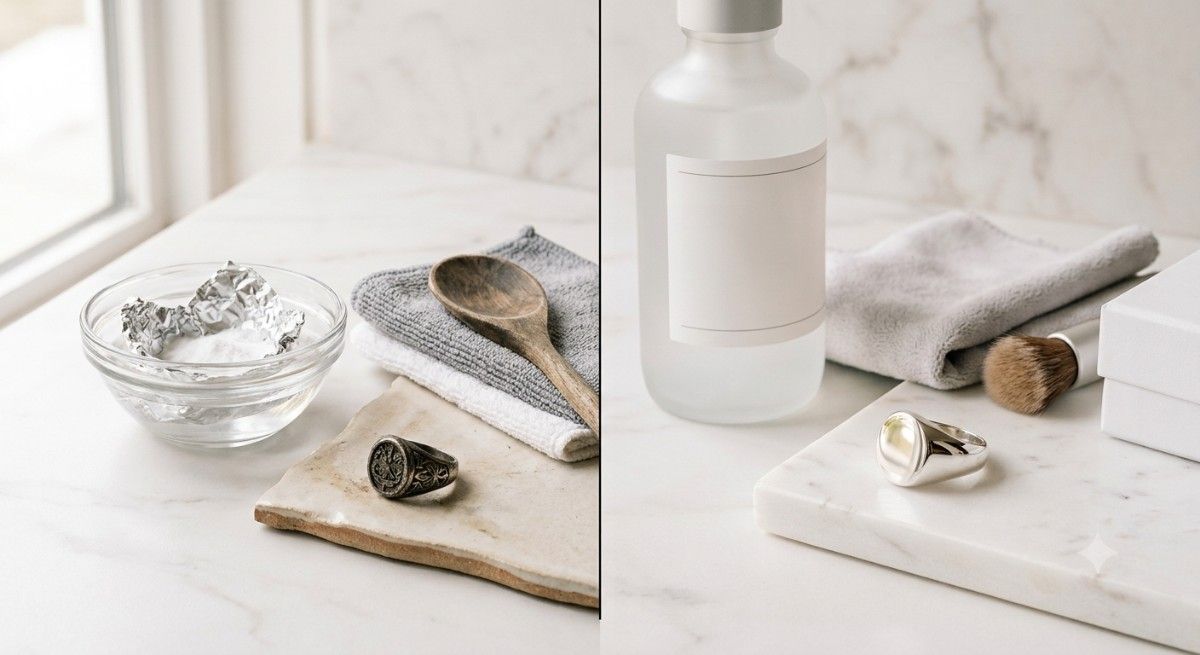
If your sterling silver jewelry has started to lose its shine, you’re probably wondering whether to use a homemade silver cleaner or buy a commercial silver cleaning product. Both methods can effectively remove tarnish, but they differ in terms of cost, convenience, cleaning power, and long-term protection.
The right choice depends on the type of silver item you’re cleaning, how heavily it’s tarnished, and whether you want a quick DIY solution or professional-quality results.
When to Choose Homemade vs Commercial Silver Cleaners
| Situation | Homemade Silver Cleaner | Commercial Silver Cleaner |
|---|---|---|
| Light tarnish | ✅ Excellent choice | ✅ Works well |
| Heavy tarnish | ⚠️ May require multiple cleanings | ✅ Best option |
| Everyday jewelry maintenance | ✅ Ideal | ✅ Good |
| Antique or oxidized silver | ⚠️ Use with caution | ✅ Use a cleaner designed for antiques |
| Intricate or detailed jewelry | ⚠️ May not clean small crevices | ✅ Cleans detailed designs effectively |
| Budget-friendly cleaning | ✅ Very affordable | ❌ Higher cost |
| Eco-friendly option | ✅ Uses common household ingredients | ⚠️ Depends on the product |
| Quick, ready-to-use solution | ❌ Requires preparation | ✅ Ready to use |
| Long-lasting tarnish protection | ❌ No protective coating | ✅ Many products include anti-tarnish protection |
| Best for beginners | ✅ Simple DIY method | ✅ Easy to use by following instructions |
Pro Tip
For the best results, use a homemade silver cleaner for regular maintenance and a commercial silver cleaner for occasional deep cleaning. This combination keeps your sterling silver jewelry shiny while helping extend the time between thorough cleanings.
Read More – Best Way to Clean Silver: 5 Cleaning Methods Ranked from Worst to Best
Homemade Silver Cleaners
Homemade silver cleaners use simple household ingredients to remove tarnish without expensive products. One of the most popular methods combines aluminum foil, baking soda, and hot water.
1. How Homemade Silver Cleaners Work
This cleaning method relies on an electrochemical reaction rather than abrasive scrubbing. When silver comes into contact with aluminum foil in a baking soda solution, the sulfur compounds that cause tarnish are transferred from the silver to the aluminum, restoring the metal’s natural shine.
Learn More – Clean a Sterling Silver Chain That Has Turned Black
2. Pros of Homemade Silver Cleaners
- Very inexpensive and uses common kitchen ingredients.
- Non-toxic and free from harsh chemicals.
- Removes tarnish without heavy scrubbing.
- Safe for most sterling silver jewelry when used correctly.
3. Cons of Homemade Silver Cleaners
- Can remove the intentional dark patina found on antique or oxidized silver.
- May cause slight surface pitting if the jewelry is left in the solution for too long.
- Doesn’t leave behind any protective coating to slow future tarnishing.
- May not clean intricate designs as thoroughly as specialized products.
Read more about Cleaning 925 Sterling Silver Ring
Commercial Silver Cleaners
Commercial silver cleaners are specially formulated products designed to remove tarnish quickly while polishing and protecting silver surfaces. They are available as creams, pastes, foams, polishing cloths, and liquid dips.
Read The Blog – Best Silver Cleaning Cloth: Does It Really Work?
1. How Commercial Silver Cleaners Work
These products use specialized cleaning agents that dissolve tarnish while polishing the silver. Many also leave behind a thin protective layer that helps delay future tarnish.
2. Pros of Commercial Silver Cleaners
- Excellent for heavily tarnished silver.
- Cleans detailed and ornate jewelry more effectively.
- Leaves a protective anti-tarnish coating.
- Produces a brighter, longer-lasting shine.
- Convenient and ready to use.
3. Cons of Commercial Silver Cleaners
- More expensive than DIY methods.
- Some products contain strong chemicals and unpleasant odors.
- Certain cleaners can be abrasive if used too aggressively.
- Liquid dips may not be suitable for jewelry with gemstones or delicate finishes.
👉🏻 How Long Does It Take for Sterling Silver to Tarnish?
Homemade vs Commercial Silver Cleaners
| Feature | Homemade Cleaners | Commercial Cleaners |
|---|---|---|
| Cost | Very affordable | Higher upfront cost |
| Ingredients | Baking soda, aluminum foil, hot water | Specialized chemical formulas |
| Ease of Use | Requires preparation | Ready to use |
| Cleaning Power | Great for light to moderate tarnish | Excellent for heavy tarnish |
| Protective Coating | No | Yes, on many products |
| Safety | Generally non-toxic | May contain harsh chemicals |
| Best For | Everyday cleaning | Deep restoration and long-term protection |
👉🏻 How Often Should You Clean Sterling Silver Jewelry?
Which Should You Choose?
A homemade silver cleaner is ideal if you want an affordable, eco-friendly solution for routine maintenance. It works well for lightly tarnished sterling silver jewelry and everyday pieces that simply need their shine restored.
A commercial silver cleaner is the better option if your jewelry has heavy tarnish, intricate detailing, or requires a protective finish that helps reduce future tarnishing. It’s also a better choice when you want professional-looking results with minimal effort.
Final Verdict
Both homemade and commercial silver cleaners have their advantages. DIY cleaning methods are budget-friendly, safe, and effective for regular maintenance, while commercial products provide stronger cleaning performance, added protection, and better results for heavily tarnished silver.
For most people, the best approach is to use a homemade cleaner for routine care and keep a quality commercial silver cleaner on hand for occasional deep cleaning. This combination helps maintain your silver jewelry’s shine while extending its lifespan.
Frequently Asked Questions
Still have questions about choosing between homemade and commercial silver cleaners? Here are answers to some of the most common questions to help you clean, protect, and maintain your sterling silver jewelry safely.
1. Is a homemade silver cleaner as effective as a commercial silver cleaner?
Homemade silver cleaners work well for removing light to moderate tarnish from sterling silver using simple household ingredients like baking soda and aluminum foil. However, commercial silver cleaners are generally more effective for heavily tarnished silver and often provide longer-lasting protection.
2. What is the best homemade silver cleaner?
One of the most popular homemade silver cleaners uses aluminum foil, baking soda, and hot water. This method creates an electrochemical reaction that removes tarnish without excessive scrubbing, making it a safe option for most sterling silver jewelry.
3. Are commercial silver cleaners safe for sterling silver?
Yes, most commercial silver cleaners are formulated specifically for sterling silver. Always follow the manufacturer’s instructions and avoid using harsh cleaners on jewelry with gemstones, pearls, or delicate finishes unless the product states it is safe for them.
4. Can baking soda damage sterling silver?
Baking soda is generally safe for sterling silver when used correctly. However, excessive scrubbing with baking soda paste or leaving silver in the cleaning solution for too long may affect oxidized finishes or antique patina.
5. Which silver cleaner is better for heavily tarnished jewelry?
Commercial silver cleaners are usually the better choice for heavily tarnished jewelry. They contain specialized formulas that remove stubborn tarnish more quickly and often leave a protective coating that helps slow future tarnishing.
6. Do homemade silver cleaners prevent tarnish from coming back?
No. Homemade silver cleaners remove existing tarnish but do not leave a protective coating. Proper storage in anti-tarnish bags or airtight containers can help keep your silver shiny for longer.
7. Can I use homemade silver cleaner on antique silver?
It’s generally not recommended. Homemade cleaning methods can remove the intentional dark patina that gives antique silver its character and value. Use products specifically designed for antique silver or consult a professional if the item is valuable.
8. How often should I clean sterling silver jewelry?
For jewelry you wear regularly, wipe it with a silver polishing cloth every week and perform a deeper cleaning every 4 to 6 weeks, or whenever you notice tarnish beginning to appear.
9. Should I use a silver polishing cloth after cleaning?
Yes. A silver polishing cloth removes fingerprints, restores shine, and helps maintain the finish after using either a homemade or commercial silver cleaner.
10. Which is more cost-effective: homemade or commercial silver cleaners?
Homemade silver cleaners are the most budget-friendly option because they use inexpensive household ingredients. Commercial silver cleaners cost more but offer greater convenience, stronger cleaning power, and additional anti-tarnish protection, making them a worthwhile investment for regular silver care.