
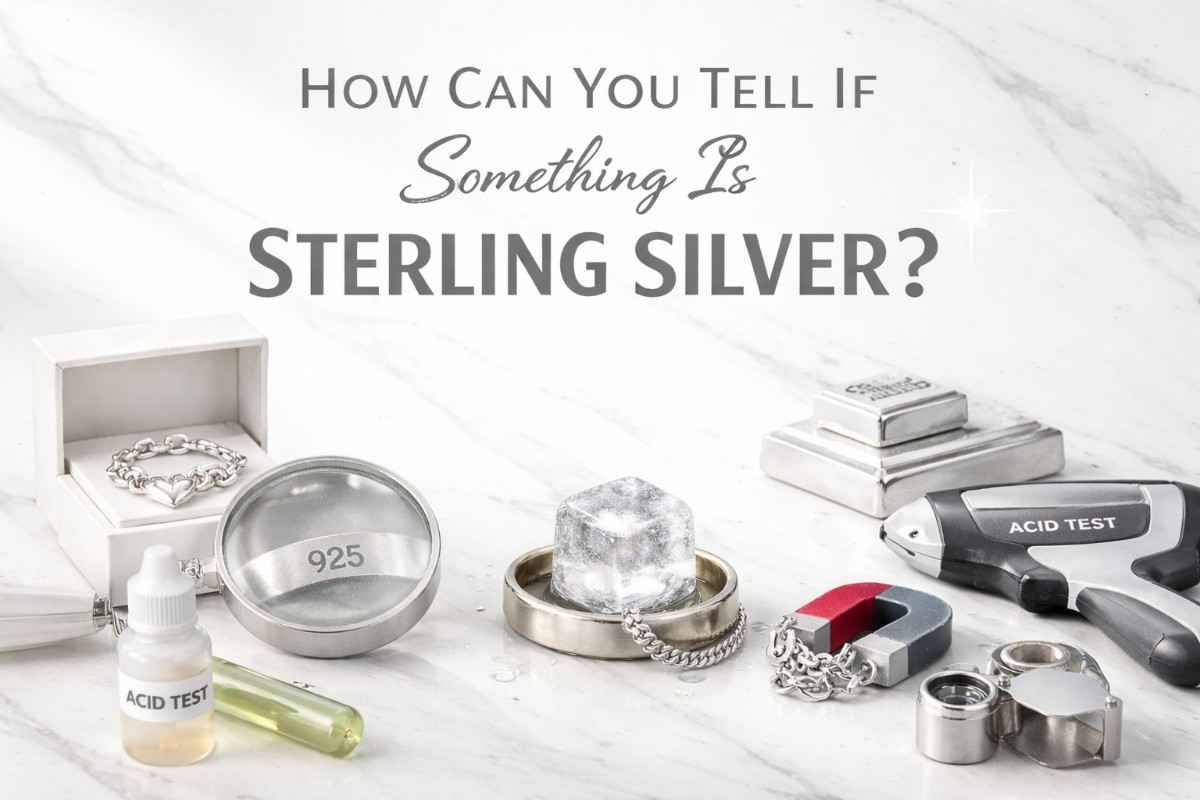
Silver jewellery looks beautiful—but not everything that shines is real silver. If you’re wondering how can you tell if something is sterling silver, you’re not alone.
If you’re planning to buy silver jewellery online, knowing how to identify real 925 sterling silver can save you from wasting money on fake or plated pieces.
In this guide, you’ll learn simple at-home tests + expert methods to check if your silver is genuine.
What Is Real Silver? (Understanding 925 Sterling Silver)
When people talk about “real silver jewellery,” they are almost always referring to 925 sterling silver—the industry standard used in high-quality jewellery.
Sterling silver is made with:
- 92.5% pure silver
- 7.5% alloy (usually copper) to improve strength and durability
This balance is essential. While pure silver (99.9%) is technically more valuable, it is too soft for everyday jewellery. It bends easily, scratches quickly, and cannot hold intricate designs well. That’s why jewellers prefer sterling silver—it offers the perfect combination of beauty, strength, and long-term wearability.
Still unsure which silver is right for you?
Explore our complete guide to make the best choice: Which is Better: 925 or 950 Silver for Jewelry?
How to Identify 925 Sterling Silver
Authentic sterling silver jewellery is typically stamped with:
- 925
- .925
- Sterling
- Ster
These markings indicate that the piece meets the global standard for real silver. However, since stamps can sometimes be faked, they should always be verified with additional tests.
💡 Expert Insight: If you want jewellery that lasts, maintains its shine, and offers real value over time, 925 sterling silver is the best choice—especially for daily wear and gifting.
1. Check the Hallmark Stamp (Your First Clue)
The first thing you should do is look for a tiny stamp on your jewellery. This is called a hallmark, and it tells you about the metal’s purity.
What should you look for?
You’ll usually find markings like:
- 925 or .925
- Sterling or Ster
- 925 Italy (very common on chains)
These stamps mean your jewellery is made of 92.5% real silver, which is what we call sterling silver.
Where can you find it?
Hallmarks are usually placed in small, less noticeable areas, so you may need to look closely. In rings, they are often stamped on the inside of the band. For necklaces, you’ll typically find them near the clasp, while on bracelets, they are commonly located on the links or around the closure.
⚠️ But here’s something important: Don’t rely only on the stamp. Some fake jewellery pieces are also marked “925” to look real.
Simple tip: Think of the hallmark as your first hint, not the final proof. To be sure, always combine this with another test—like the magnet or tarnish check.
2) The Magnet Test (Quick, simple, and surprisingly useful)
If you’re wondering how can you tell if something is sterling silver, the magnet test is one of the fastest ways to start.
Sterling silver jewellery is not magnetic, so a strong magnet should not stick to it. Slowly move a magnet across the main part of the piece and observe what happens.
If it sticks firmly, it is not real silver. If there is no reaction, it could be genuine—but it is always best to confirm with another method.
A small detail many people overlook is that some pieces include tiny steel components, like clasps or hooks. If only those parts react, it does not mean the entire piece is fake. Focus on the main metal.
3) Look for Tarnish (real silver darkens, and that’s normal)
Another simple way to understand how can you tell if something is sterling silver is by observing how it ages over time.
Real 925 sterling silver naturally develops tarnish when exposed to air and moisture. This can appear as a darker tone, slight dullness, or black residue when polished. This is completely normal and actually a sign of authenticity.
Fake silver, on the other hand, behaves differently. Instead of tarnishing evenly, it may peel, fade, turn green or yellow, or reveal a different metal underneath.
For a quick check, gently rub the piece with a clean white cloth. If you notice black marks, it is usually a strong indicator that the jewellery is made from real silver.
4) The Ice Test (A simple trick based on real science)
If you’re still thinking about how can you tell if something is sterling silver, this test is a quick and interesting one to try at home.
Silver is known for its high thermal conductivity, which means it transfers heat very quickly. That’s why real silver often feels cold the moment you touch it.
Here’s what you can do:
Place a small ice cube directly on the jewellery
Watch how quickly it reacts
If the ice starts melting almost instantly, there’s a good chance the piece contains real silver. Other metals may also conduct heat, but not as efficiently as sterling silver.
💡 This test works best when combined with others, like the hallmark or magnet test, for a more reliable result.
5) Check for Plating (The biggest red flag most people miss)
One of the easiest ways to spot fake silver is by carefully inspecting the surface. Many pieces are not solid silver—they are simply silver-plated jewellery, which means a thin layer of silver is applied over a cheaper metal.
Over time, this layer begins to wear off.
Look closely for these signs:
- Fading or uneven color
- Flaking or peeling edges
- A different metal showing underneath
Pay extra attention to high-contact areas like:
- The bottom of rings
- Near the chain clasp
- Bracelet edges and links
If you notice a warmer tone (like copper or brass) coming through, it’s a clear indication the piece is not real sterling silver.
💡 Pro Insight: This is often the most reliable visual test. Unlike stamps (which can be faked), plating wear is very hard to hide—making it a strong clue when checking authenticity
6) The Sound Test (A subtle but useful clue)
If you’re trying to figure out how can you tell if something is sterling silver, the sound test can give you an extra hint—especially for solid pieces.
When you gently tap real silver, it usually produces a clear, bright ringing sound that lingers for a moment. In contrast, fake or base metals tend to sound flat or dull.
This test works best with:
- Rings
- Bangles
- Thick chains or heavier pieces
💡 It’s not the most scientific method, but once you’ve heard the difference a few times, it becomes easier to recognize.
7) Get a Professional Test (The most accurate option)
If the jewellery is valuable, sentimental, or you simply want a definite answer, this is the best step to take.
A professional jeweler can test 925 sterling silver jewellery using advanced methods such as:
- Acid testing to check metal composition
- Electronic testers for quick verification
- XRF (X-ray fluorescence) for highly accurate, non-damaging analysis
These methods provide near 100% confirmation, removing any doubt.
💡 If you’re still unsure after trying basic tests at home, this is the safest and most reliable way to confirm whether your silver is real.
Sterling Silver vs Fake Silver (Quick Comparison)
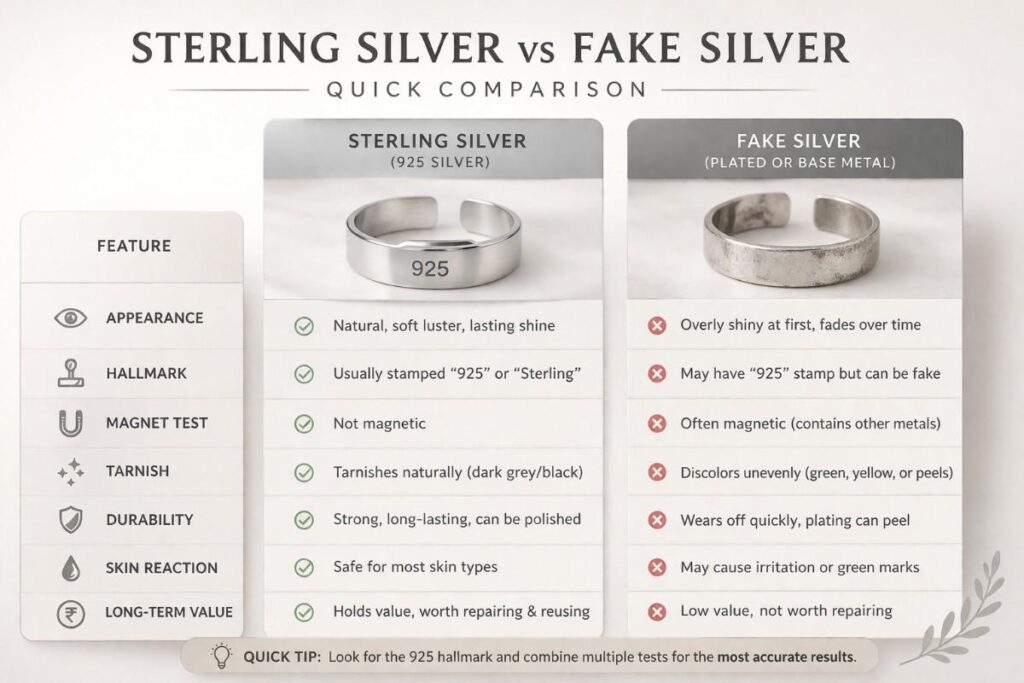
| Feature | 925 Sterling Silver | Fake / Plated Silver |
|---|---|---|
| Composition | 92.5% real silver | Base metal + coating |
| Durability | Long-lasting | Wears off quickly |
| Tarnish | Yes (normal) | Peels or changes color |
| Value | High resale value | Low |
| Skin Safety | Usually safe | May cause irritation |
Common Silver Marks That Mislead Buyers
When learning how can you tell if something is sterling silver, one of the biggest mistakes people make is trusting labels without understanding what they actually mean.
Some markings sound convincing—but they don’t indicate real silver at all.
Here are a few you should watch out for:
- Nickel silver → Contains no real silver (just a mix of metals)
- Silver tone → Only describes the color, not the material
- EPNS (Electroplated Nickel Silver) → A silver-coated item, not solid silver
- 925 stamp (fake) → Can be misleading and should always be verified
💡 The key takeaway: A stamp alone is not enough. Always combine it with physical tests to confirm authenticity.
What About Silver-Plated Jewellery?
Silver-plated jewellery can look almost identical to real silver at first glance—but it’s very different in terms of quality and durability.
Instead of being solid silver, it has:
A thin layer of silver coating over a cheaper base metal
A shiny, attractive appearance initially
A tendency to fade, peel, or wear off over time
As the coating wears down, the underlying metal becomes visible, which affects both the look and longevity of the piece.
If you’re buying jewellery for daily wear or long-term use, it’s always better to choose 925 sterling silver jewellery. It lasts longer, maintains its appearance, and offers better value over time.
Can Fake Silver Tarnish?
Yes—and this is exactly where many people get confused when figuring out how can you tell if something is sterling silver.
Tarnish alone is not proof of authenticity. Some fake or low-quality metals can also react with air and moisture.
For example:
- Certain metals can oxidize like real silver
- You may notice discoloration or dark patches over time
This is why relying on just one test can lead to the wrong conclusion.
💡 Important insight: Real 925 sterling silver jewellery usually tarnishes in a more natural, even way, while fake silver tends to peel, fade unevenly, or reveal another metal underneath.
The smartest approach is to combine multiple silver testing methods for accurate results.
Best Way to Check Silver (Expert Method)
If you want a more reliable answer at home, don’t depend on a single test. Instead, use a combination of proven methods to check real silver jewellery.
For best results, combine:
- Hallmark check (look for 925 or Sterling stamp)
- Magnet test (silver is non-magnetic)
- Cloth rub test (black marks indicate oxidation)
- Plating inspection (check for wear or exposed metal)
When used together, these tests give you a near-accurate result without needing professional tools.
💡 This is one of the most effective ways to identify genuine sterling silver at home.
Why Buying Real Silver Jewellery Matters
If you’re planning to buy silver jewellery online, choosing real silver is more than just a quality decision—it’s a long-term investment.
Real 925 silver jewellery for women offers several advantages:
Here’s why it’s worth it:
- Lasts for years without losing its core value
- Can be polished, cleaned, and reused easily
- Holds resale value better than plated jewellery
- Generally safer for sensitive skin (low irritation risk)
- Maintains a premium look over time
💡 Unlike silver-plated options, genuine sterling silver gives you both durability and authenticity—making it the smarter choice for everyday wear and gifting.
FAQs – How to Tell If Silver Is Real
1: How can you test sterling silver at home?
You can test sterling silver at home using simple methods like the hallmark check, magnet test, and cloth rub test. These don’t require special tools and can give you a fairly reliable idea of whether your jewellery is real or not.
2: Will a magnet stick to sterling silver?
No, real sterling silver is not magnetic. If a magnet sticks strongly to the piece, it likely contains other metals. However, small parts like clasps may react slightly, so always test the main body.
3: How to tell if something is sterling silver if not marked?
If there’s no stamp, you can rely on physical tests like tarnish behavior, magnet response, and checking for plating wear. Real silver usually darkens naturally over time instead of peeling or changing color unevenly.
4: What does fake sterling silver look like?
Fake silver often looks overly shiny at first but may fade, peel, or show a different metal underneath over time. You might also notice green or yellow discoloration, especially in areas that touch the skin.
5: How to test silver at home with toothpaste?
Some people use toothpaste to clean and lightly test silver. If the piece develops a brighter shine and shows slight black residue during cleaning, it may indicate real silver, but this method is not always reliable on its own.
6: How much is 1 oz of 925 sterling silver worth?
The value of 925 sterling silver depends on the current market price of silver. Since it contains 92.5% pure silver, its price is slightly lower than pure silver but still holds good value.
7: What is poor man’s silver?
“Poor man’s silver” usually refers to metals like nickel silver or German silver. Despite the name, these do not contain real silver and are simply alloys designed to look similar.
8: What color does silver turn when it’s fake?
Fake silver may turn green, yellow, or even show copper tones underneath. Unlike real silver, which tarnishes to a dark grey or black, fake metals often change color unevenly.
9: Will dish soap remove tarnish from silver?
Mild dish soap can help clean dirt and oils from silver, but it won’t fully remove tarnish. Tarnish is a chemical reaction, so it usually requires proper silver cleaning methods to restore shine.
10: What are signs of fake silver?
Common signs include strong magnetic reaction, peeling or flaking surface, discoloration, and visible base metal underneath. Fake silver may also feel lighter and less solid.
11: Is sterling silver ever unmarked?
Yes, some older, handmade, or region-specific pieces may not have a stamp. In these cases, you’ll need to rely on tests like tarnish behavior or get it checked by a jeweler.
12: How can I test silver with vinegar?
When you place a drop of vinegar on silver, real silver usually does not change color significantly. If the metal turns green or reacts strongly, it may indicate that the piece is not genuine sterling silver.