
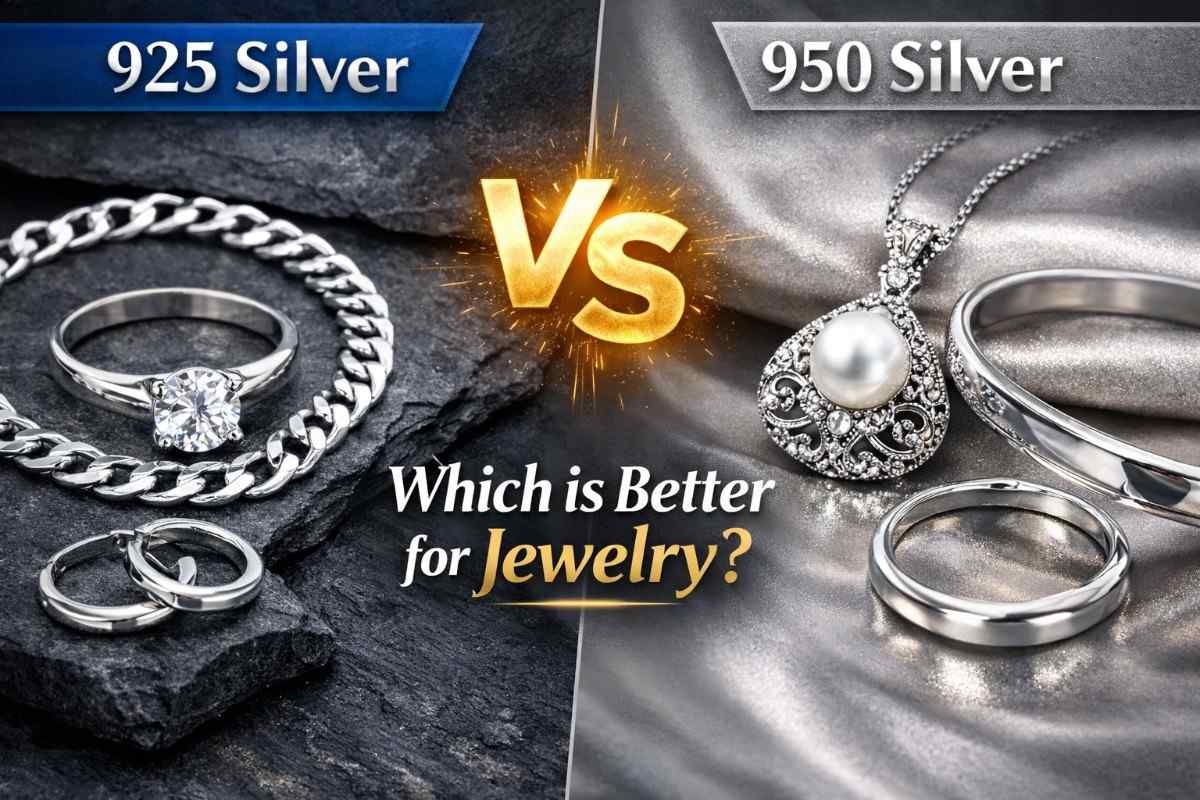
925 silver (sterling silver) is better for most jewelry because it is more durable and suitable for daily wear, while 950 silver is better for purity and shine but softer and less practical.
When buying silver jewelry, one common question that confuses many buyers is: Which is better, 925 or 950 silver? Both are high-quality silver alloys, but they differ slightly in purity, durability, and practical use. While 950 silver offers higher silver content, 925 silver—also known as sterling silver—is widely preferred for its strength and long-lasting performance.
In this guide, you’ll discover the key differences between 925 and 950 silver, their pros and cons, and which one is the better choice for everyday jewelry. Whether you’re shopping for style, durability, or value, this comparison will help you make the right decision.
925 vs 950 Silver – Comparison Table
Understanding the difference between 925 vs 950 silver is essential before choosing the right jewelry for your needs. While both are forms of sterling silver and high-purity silver alloys, they differ in durability, shine, and everyday usability. This silver purity comparison helps you evaluate factors like strength, maintenance, and long-term value. The comparison table below gives you a quick, side-by-side view to help you decide which option suits your lifestyle, budget, and style preferences best.
| Feature | 925 Silver (Sterling) | 950 Silver |
|---|---|---|
| Purity | 92.5% silver | 95% silver |
| Durability | ⭐⭐⭐⭐⭐ (stronger) | ⭐⭐⭐ (softer) |
| Shine | Bright | Slightly brighter |
| Tarnish | Moderate | Less tarnish |
| Best For | Daily wear jewelry | Artistic / luxury pieces |
Want to make sure your silver is real?
Learn how to identify genuine sterling silver with our complete guide:
Check out: How to Identify Authentic Sterling Silver Jewelry
Which is Better: 925 or 950 Silver for Jewelry? Here is the Detailed Answer
When comparing 925 and 950 silver, the “better” option depends on how you plan to use your jewelry. While many articles focus only on purity, a smarter buying decision considers durability, comfort, maintenance, and long-term value. Here’s a deeper, practical comparison that helps you choose the right silver for real-life use—not just technical specs.
925 Silver Jewellery You May Like


950 Silver Jewellery You May Like


Want to Know Whether 950 Silver or 925 Sterling Silver Is the Better Choice?
Silver purity can affect everything from durability and tarnish resistance to appearance and price. If you’re comparing different silver types before buying jewelry, our in-depth guide breaks down the key differences in a simple and easy-to-understand way.
950 Silver vs 925 Sterling Silver: Differences, Durability, Price & Which Is Better?
Discover how 950 silver and 925 sterling silver compare in terms of purity, everyday wear, maintenance, value for money, and long-term performance. Whether you’re shopping for rings, necklaces, bracelets, or earrings, this guide will help you choose the right silver jewelry with confidence.
1. Purity Difference: Is 950 Silver Really Better?
950 silver contains 95% pure silver, while 925 silver (sterling silver) contains 92.5% silver mixed with stronger metals like copper.
At first glance, higher purity might seem better. However, the 2.5% difference is minimal and doesn’t create a dramatic visual or functional advantage.
Read – How to tell if something is Starline Silver
In reality:
- Both look almost identical to the naked eye
- Both are considered premium silver alloys
- The purity difference matters more on paper than in daily wear
950 is technically purer, but not significantly “better” for most buyers.
2. Durability & Strength: Why 925 Silver Wins
This is where the real difference appears.
925 silver is mixed with more alloy (usually copper), making it:
- Stronger
- More scratch-resistant
- Less likely to bend or lose shape
950 silver, with higher purity, is:
- Softer
- More prone to scratches
- Easier to bend, especially in thin designs
This is the main reason why 925 silver is used worldwide for jewelry making.
Real-life example:
- A 925 silver ring can handle daily wear for years
- A 950 silver ring may lose shape faster with regular use
If durability matters, 925 silver is the clear winner.
3. Everyday Wear: Which One is More Practical?
If you plan to wear your jewelry daily, practicality matters more than purity.
925 Silver is ideal for:
- Daily wear rings, chains, and bracelets
- Office wear and casual styling
- Long-term use without frequent repairs
950 Silver is better for:
- Occasional wear
- Statement or designer pieces
- Jewelry that isn’t exposed to daily stress
Because 950 is softer, it requires more care and is not as “wear-and-forget” friendly.
For everyday use, 925 silver is the smarter choice.
4. Appearance & Shine: Is There a Visible Difference?
950 silver has slightly higher purity, which can give it:
- A marginally brighter, whiter appearance
- A more “premium” finish in some cases
However:
- The difference is very subtle in a 925 vs 950 silver comparison
- Most people cannot distinguish sterling silver (925) from 950 silver jewelry visually
In reality, factors like polishing, design, and craftsmanship have a bigger impact on the silver jewelry shine and finish than purity alone.
👉 The shine difference is too small to be a deciding factor when choosing between 925 vs 950 silver for jewelry.
5. Tarnish & Maintenance: Which Needs More Care?
Both 925 and 950 silver can tarnish over time when exposed to air and moisture.
However:
- 950 silver may tarnish slightly slower due to lower copper content
- 925 silver may tarnish a bit faster but is easier to maintain and polish
With proper care (cleaning and storage), both can last for years.
The maintenance difference is minor and manageable.
6. Price & Value: Are You Paying More for 950?
950 silver is usually:
- Slightly more expensive
- Marketed as “premium purity”
But here’s the key insight:
You are paying more for a small increase in purity, not performance.
925 silver offers:
- Better durability
- Better long-term usability
- Better overall value for money
925 silver delivers higher practical value.
Final Verdict: Which is Better, 925 or 950 Silver?
Choose 925 Silver if you want:
- Durable, long-lasting jewelry
- Daily wear pieces
- Better value for money
Choose 950 Silver if you want:
- Slightly higher purity
- Softer, handcrafted or luxury designs
- Jewelry for occasional wear
Bottom Line
925 silver is better for most jewelry because it is more durable and suitable for daily wear, while 950 silver offers higher purity but is softer and less practical for everyday use.
FAQs – 925 vs 950 Silver
Before choosing between 925 and 950 silver, it’s natural to have a few common questions about their value, durability, and everyday use. From understanding price differences to deciding which is better for bracelets or daily wear, these FAQs cover the most important concerns buyers have. Go through the answers below to make a confident and informed jewelry choice.
1: What is 950 silver worth?
950 silver is slightly more valuable than 925 silver because it contains 95% pure silver. Its price depends on the current silver market rate, weight, and craftsmanship. However, the difference in value is usually small, so design and durability often matter more than purity alone.
2: Which is better, 925 or 950 silver for a jewelry bracelet?
925 silver is generally better for bracelets because it is stronger and more durable for daily wear. Since bracelets are exposed to frequent movement and impact, 925 silver holds its shape better, while 950 silver may bend or scratch more easily over time.
3: Is 950 silver better than 925 silver?
950 silver is purer, but 925 silver is more durable. For most jewelry, especially daily wear, 925 silver is considered the better option because it balances strength and quality.
4: Does 950 silver tarnish less than 925 silver?
Yes, 950 silver may tarnish slightly less because it contains less copper. However, both types of silver can tarnish over time and require proper care to maintain their shine.
5: Can you wear 950 silver every day?
You can wear 950 silver daily, but it requires more care. Due to its softness, it is more prone to scratches and bending, making it less ideal for heavy everyday use compared to 925 silver.
6: How can you tell if silver is 925 or 950?
Check for hallmarks stamped on the jewelry. 925 silver is usually marked as “925” or “Sterling,” while 950 silver may be marked as “950.” If there is no marking, professional testing may be required.
7: Why is 925 silver more popular in jewelry?
925 silver is widely used because it is strong, durable, and affordable. It offers a perfect balance between purity and practicality, making it ideal for everyday jewelry.