
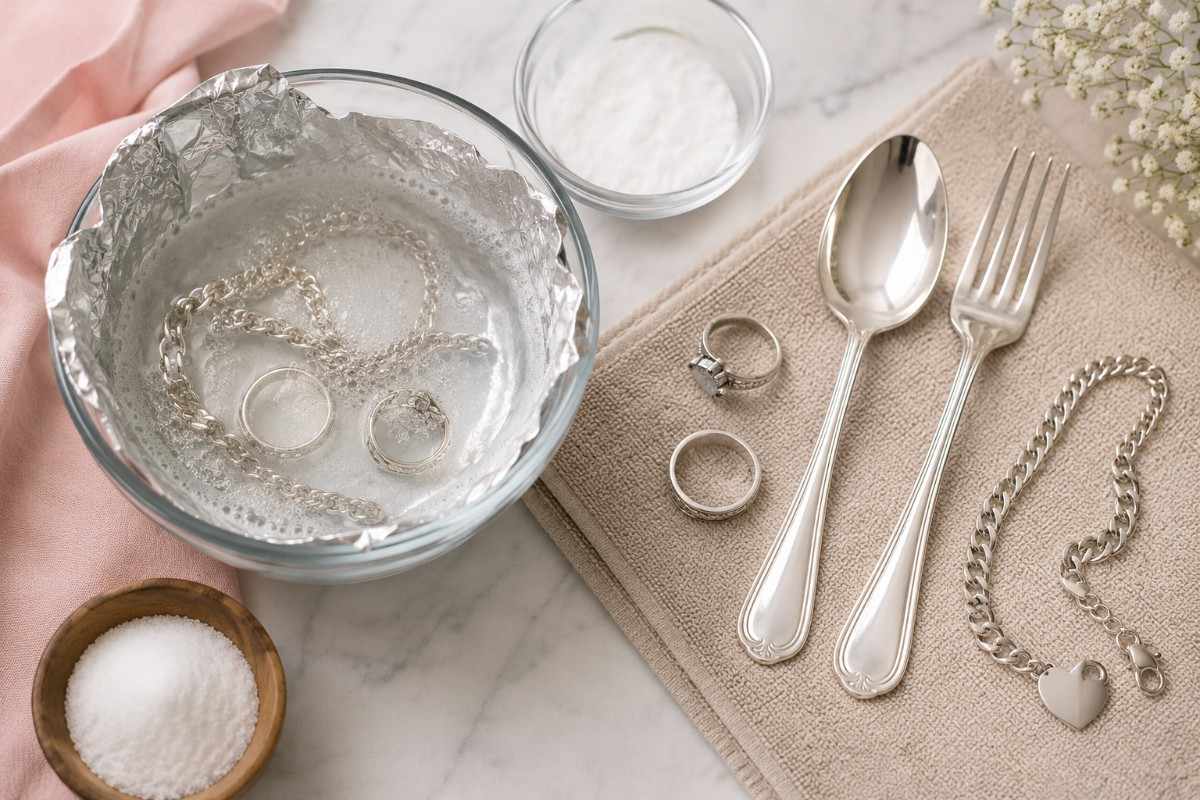
Silver jewelry, silverware, and decorative silver items can lose their shine over time due to tarnish. Tarnish occurs when silver reacts with sulfur compounds in the air, creating a dark layer called silver sulfide. The good news is that tarnished silver can usually be restored with the right cleaning method.
However, not all silver cleaning methods deliver the same results. Some remove tarnish quickly and safely, while others may scratch or damage your silver.
In this guide, we’ll rank the most popular ways to clean silver from best to worst based on effectiveness, safety, cost, and ease of use.
Quick Comparison of Silver Cleaning Methods
| Rank | Method | Effectiveness | Safety | Speed | Best For |
|---|---|---|---|---|---|
| #1 | Aluminum Foil & Baking Soda | Excellent | Good | Very Fast | Heavily Tarnished Silver |
| #2 | Commercial Silver Polish | Excellent | Excellent | Moderate | Valuable & Antique Silver |
| #3 | Baking Soda Paste | Good | Moderate | Moderate | Light Tarnish |
| #4 | Toothpaste | Fair | Poor | Fast | Emergency Use Only |
| #5 | Harsh Household Cleaners | Poor | Very Poor | Varies | Not Recommended |
Read More – Why Silver Jewelry Lasts a Lifetime? 925 vs 950 Silver Guide
Highly Rated Professional Silver Jewellery Tarnish Remover
Looking for the best cleaner for tarnished silver? Here are some highly rated products you can buy.
1. Silver Cream Cleaner with 3-in-1 Anti-Tarnish Technology (8 oz)

This liquid metal polish is designed to clean, polish, and protect a wide range of metal surfaces in a single application. Its non-abrasive formula effectively removes tarnish and restores shine while being gentle enough for regular use on valuable jewelry and decorative metal items.
Specifications
- Product Type: Liquid metal polish
- Form: Liquid
- Scent: Unscented
- Formula: Non-abrasive
- Suitable For: Sterling silver, silver-plated items, gold, brass, copper, aluminum, and antique silver
- Cleaning Action: Removes tarnish, oxidation, and surface dullness while restoring a polished finish
- Key Ingredients: A blend of surfactants, mild abrasives, solvents, buffing agents, and corrosion inhibitors for effective cleaning and protection
- Application: Apply with a soft cloth, then buff with a clean cloth to achieve a brilliant shine
- Container Size: 8 fl oz
2. Gently Clean and Remove Tarnish without Scratching (Ammonia-Free) Pack Of 2

If you’re looking for a versatile metal polish that does more than just clean silver, this polishing cream is an excellent option.
Its gentle, ammonia-free formula is designed to remove tarnish, restore shine, and help protect a variety of precious metals without scratching the surface.
Specifications
- Product Type: Metal polishing cream
- Form: Cream
- Scent: Unscented
- Formula: Ammonia-free and non-scratch
- Suitable For: Sterling silver, silver-plated items, gold, brass, pewter, chrome, porcelain, and other metal surfaces
- Safe For: Jewelry with diamonds and gemstones
- Cleaning Action: Removes tarnish, oxidation, and dullness while restoring a brilliant shine
- Protective Feature: Leaves behind an anti-tarnish coating to help prevent future discoloration
3. Silver Polish Foam – Tarnish Remover for Jewelry

If your sterling silver jewelry has lost its shine due to tarnish, this professional silver foam cleaner provides a quick and convenient way to restore its original brilliance. Its easy-to-use foaming formula is designed to clean both sterling silver and silver-plated items while helping to protect them from future tarnish.
Specifications
- Product Type: Silver foam cleaner
- Form: Foam
- Scent: Unscented
- Suitable For: Sterling silver jewelry, silver-plated jewelry, antiques, and decorative silver items
- Application: Includes a sponge applicator for easy cleaning
- Cleaning Action: Dissolves tarnish and oxidation without heavy scrubbing
- Protective Feature: Leaves a protective coating to help slow future tarnish
- Best For: Rings, necklaces, bracelets, earrings, chains, and intricate silver designs
How We Ranked These Silver Cleaning Methods
To determine the best way to clean silver, we considered several important factors:
- Ability to remove silver tarnish
- Risk of scratching silver
- Cost of materials
- Time required
- Suitability for silver jewelry and silverware
- Safety for long-term silver care
Methods that effectively restore silver shine without damaging the metal ranked higher.
1. Aluminum Foil and Baking Soda Method (Best Overall)
The aluminum foil and baking soda method is the clear winner for most people. It is fast, inexpensive, and highly effective at removing tarnish from silver.
Unlike abrasive cleaning techniques, this method uses an electrochemical reaction. Instead of scrubbing away tarnish, the reaction transfers silver sulfide from the silver surface to the aluminum foil.
How the Method Works
When aluminum foil, baking soda, salt, and hot water are combined, a chemical reaction occurs. The tarnish is removed from the silver and transferred to the aluminum.
This process helps restore the silver’s natural shine while minimizing physical abrasion.
How to Clean Silver Using Aluminum Foil
- Line a heat-proof bowl or dish with aluminum foil, shiny side facing up.
- Place the silver items directly on the foil.
- Sprinkle one tablespoon of baking soda and one tablespoon of salt per cup of water.
- Pour boiling water into the dish until the silver is fully submerged.
- Allow the items to soak for 2–5 minutes.
- Remove the silver, rinse thoroughly, and dry with a soft cloth.
Pros
- Extremely fast
- No scrubbing required
- Excellent for heavy tarnish
- Low cost
- Easy household ingredients
Cons
- Not recommended for antique silver
- Avoid hollow-handled items
- Not suitable for jewelry containing pearls, opals, or glued gemstones
Best For
This method is ideal for silver jewelry, sterling silver chains, silverware, and other modern silver items that have developed noticeable tarnish.
Read More – How to Clean Sterling Silver with Diamonds
2. Commercial Silver Polish
Commercial silver polish ranks second because it combines effectiveness with safety. Many professional jewelers and collectors rely on silver polishes specifically designed for precious metals.
Unlike homemade cleaning methods, commercial products are formulated to remove tarnish while preserving the silver’s finish.
Why Silver Polish Works So Well
Silver polishes contain cleaning agents that dissolve tarnish and polishing compounds that restore shine. They also provide greater control when cleaning delicate items.
This makes them particularly useful for expensive jewelry, heirloom silverware, and collectible silver pieces.
Advantages of Silver Polish
Commercial silver cleaners are:
- Designed specifically for silver
- Effective on stubborn tarnish
- Safer for valuable items
- Excellent for restoring shine
Drawbacks
The main downside is that polishing requires more time and effort than the aluminum foil method. Some products may also be more expensive than DIY alternatives.
Best For
Use commercial silver polish when cleaning:
- Antique silver
- Heirloom jewelry
- Valuable sterling silver pieces
- Delicate silver items
If preserving value is your top priority, silver polish is often the safest option.
Learn – How to Tell If Sterling Silver Is Real Before You Buy
3. Baking Soda Paste
Baking soda paste is one of the most popular homemade silver cleaning solutions. It is simple to prepare and can effectively remove light tarnish.
To make the paste, combine baking soda with a small amount of water until a thick consistency forms. The paste is then gently rubbed onto the silver and rinsed away.
Why It Ranks Lower
Although baking soda is generally considered mild, it still works as an abrasive cleaner. The cleaning process depends on physically rubbing the tarnish away.
Over time, excessive rubbing may create microscopic scratches on silver surfaces.
Benefits
Baking soda paste offers several advantages:
- Affordable
- Easy to make
- Effective on mild tarnish
- Readily available ingredients
Limitations
It is less effective on heavily tarnished silver and requires more effort than chemical tarnish-removal methods.
Best For
This method works best for lightly tarnished silver jewelry that needs occasional maintenance rather than deep cleaning.
Best Ways to Clean a Sterling Silver Chain That Has Turned Black
4. Toothpaste Method
For years, people have recommended toothpaste as a quick silver cleaner. While toothpaste can make silver appear cleaner, it is not considered a professional silver care method.
The reason is simple: toothpaste is designed to clean teeth, not precious metals.
Why Toothpaste Can Be Risky
Most toothpaste formulas contain abrasive particles that help remove stains from enamel. Those same particles can scratch silver surfaces.
While one cleaning session may not cause visible damage, repeated use can wear down details and reduce the quality of polished finishes.
Advantages
The main advantage is convenience. Most households already have toothpaste available.
Disadvantages
- Can scratch silver
- May dull polished finishes
- Not suitable for valuable jewelry
- Poor long-term solution
Best For
Only consider toothpaste if no better cleaning option is available. Even then, use it sparingly and with caution.
Learn More – Restore the Shine of Your 925 Sterling Silver Ring with These Methods
5. Harsh Household Cleaners (Worst Method)
At the bottom of the list are harsh household cleaning products.
Many people assume that stronger cleaners produce better results, but that is not true for silver. Products designed for bathrooms, kitchens, or general cleaning often contain chemicals that are too aggressive for precious metals.
Why They Are a Bad Choice
Harsh chemicals can:
- Damage silver finishes
- Cause discoloration
- Strip protective coatings
- Accelerate future tarnishing
Some products may initially make silver appear cleaner, but the long-term damage can be significant.
Best Practice
If a cleaning product is not specifically intended for silver, it is usually best to avoid using it.
Which Method Is Best for Silver Jewelry?
For most silver jewelry, the aluminum foil and baking soda method offers the best combination of speed, affordability, and effectiveness.
However, jewelry containing delicate gemstones requires extra caution. Pearls, opals, turquoise, and other porous stones should never be exposed to boiling water or chemical tarnish-removal reactions.
For gemstone jewelry, a professional silver polish is generally the safer option.
Which Method Is Best for Antique Silver?
Antique silver requires special care because older pieces may contain delicate construction, glued components, or valuable finishes.
For antique silver, commercial silver polish is usually the safest choice. The aluminum foil method may be too aggressive for fragile heirloom pieces.
When in doubt, consult a professional jeweler or silver restoration expert.
Final Verdict
If you’re looking for the fastest way to clean tarnished silver, the aluminum foil and baking soda method deserves the top spot. It removes tarnish in just a few minutes, requires minimal effort, and restores silver shine without heavy scrubbing.
For valuable antiques and delicate heirloom pieces, commercial silver polish remains the safest solution. Baking soda paste can help with light tarnish, while toothpaste should only be considered as a last resort.
No matter which method you choose, regular silver care and proper storage will help keep your silver jewelry and silverware looking bright and tarnish-free for years to come.