
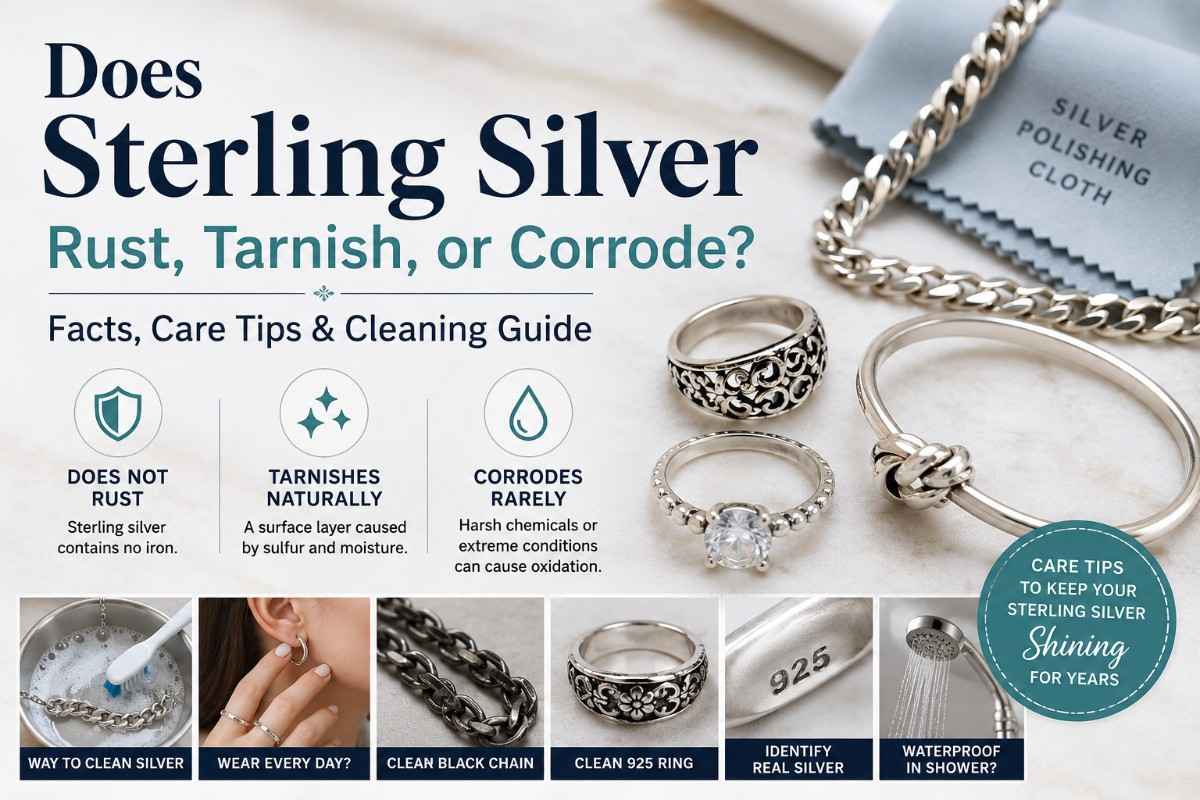
Sterling silver is one of the most popular metals used in jewelry because of its brilliant shine, durability, and timeless appeal. However, many people become concerned when their favorite silver ring, chain, or bracelet starts to lose its luster. This often leads to questions like: Does sterling silver rust? Does it tarnish? Can it corrode?
The simple answer is that sterling silver does not rust because it contains no iron. However, it does tarnish naturally when exposed to air, moisture, sulfur compounds, and certain chemicals. In rare cases, prolonged exposure to harsh environments can also cause minor corrosion, although this is very different from rust.
Understanding the difference between rust, tarnish, and corrosion is essential for properly caring for your jewelry. It also helps you make informed decisions when buying sterling silver pieces and maintaining their shine for years.
In this guide, you’ll learn why sterling silver changes color, what causes tarnishing, how it differs from rust, and what you can do to keep your jewelry looking like new.
Does Sterling Silver Rust?
No. Sterling silver does not rust.
Rust is a type of corrosion that occurs only on metals containing iron, such as steel and cast iron. When iron reacts with oxygen and moisture, it forms iron oxide, commonly known as rust. Over time, rust spreads deeper into the metal, weakening its structure.
Sterling silver is completely different. It is made of 92.5% pure silver and 7.5% other metals, most commonly copper. Since sterling silver contains virtually no iron, authentic sterling silver cannot develop rust.
If you notice reddish-brown rust on a piece advertised as sterling silver, it may be a silver-plated item with an iron or steel base metal rather than genuine sterling silver.
Why Doesn’t Sterling Silver Rust?
The reason is simple—rust requires iron, and sterling silver contains none.
Pure silver is classified as a noble metal, meaning it naturally resists oxidation and corrosion much better than many other metals. However, pure silver is too soft for everyday jewelry. To increase its strength and durability, manufacturers mix it with a small amount of copper, creating what we know as 925 sterling silver.
While copper improves durability, it also reacts with environmental elements over time. Instead of rusting, sterling silver undergoes a completely different chemical process known as tarnishing.
This is why genuine sterling silver jewelry may darken after months or years of wear, even though it never develops rust.
Does Sterling Silver Tarnish?
Yes. Tarnishing is a natural characteristic of sterling silver.
Unlike rust, tarnish is a thin surface layer that develops when sterling silver reacts with sulfur compounds in the surrounding environment. During this reaction, a compound called silver sulfide (Ag₂S) forms on the surface of the jewelry.
Because sterling silver also contains copper, the alloy becomes slightly more reactive than pure silver. This is why sterling silver tarnishes faster than fine silver.
The important thing to remember is that tarnish only affects the outer surface of the jewelry. It does not damage the metal underneath or reduce the quality of genuine sterling silver.
Depending on the level of exposure, tarnished sterling silver may appear:
- Light yellow
- Brown
- Gray
- Dark black
- Dull instead of shiny
Fortunately, tarnish is completely removable with proper cleaning and regular maintenance.
What Causes Sterling Silver to Tarnish?
Although tarnishing is unavoidable over time, certain environmental factors can speed up the process.
1. Air Pollution
Sulfur compounds naturally present in the air are the primary cause of tarnish. As sterling silver reacts with these compounds, a thin layer of silver sulfide gradually forms on the surface.
2. Moisture and Humidity
Moisture accelerates the chemical reaction responsible for tarnishing. This is why sterling silver stored in humid bathrooms or damp environments often loses its shine more quickly.
Many people also ask, “Is Sterling Silver Waterproof?” The answer is no. Sterling silver is water-resistant but not completely waterproof. Occasional contact with clean water is generally harmless, but frequent or prolonged exposure to moisture can speed up tarnishing.
Similarly, if you’re wondering “Is 925 Sterling Silver Waterproof in the Shower?”, the answer is that it is best not to wear it while showering. Soap residue, shampoo, hard water minerals, and constant moisture can dull the finish and accelerate tarnish over time.
3. Sweat and Body Oils
Natural sweat contains salts and sulfur compounds that react with sterling silver. During hot weather or exercise, jewelry may tarnish more quickly because of increased perspiration.
4. Cosmetics and Personal Care Products
Perfumes, lotions, sunscreen, makeup, and hairspray contain chemicals that can react with the copper in sterling silver. Applying these products before wearing your jewelry helps reduce unnecessary exposure.
5. Household Chemicals
Bleach, chlorine, ammonia, and strong cleaning agents are particularly harmful to sterling silver. These chemicals may not cause rust, but they can accelerate tarnishing and lead to discoloration if exposure is frequent.
Why Tarnish Isn’t a Sign of Poor Quality
Many people believe that sterling silver turning black means it is fake. In reality, the opposite is often true.
Authentic sterling silver naturally tarnishes because it reacts with sulfur in the environment. High-quality sterling silver develops a removable surface layer over time, while many inexpensive imitation metals simply lose their plating or coating.
If you’re unsure about a piece, learning how to identify authentic sterling silver jewelry can help. Look for hallmarks such as 925, Sterling, or Sterling Silver, which indicate that the jewelry contains 92.5% pure silver.
Tarnishing is simply a sign that your jewelry is genuine and can usually be restored to its original shine with proper care.
Can Sterling Silver Corrode?
Although sterling silver does not rust, it can experience minor corrosion under certain conditions.
Corrosion is the gradual breakdown of a metal caused by chemical reactions with its environment. Rust is one type of corrosion that affects iron, but sterling silver behaves differently because it contains no iron.
Sterling silver has excellent corrosion resistance and performs well during normal everyday wear. However, the 7.5% copper in the alloy can react to harsh environments, leading to oxidation, discoloration, or surface damage over time.
Situations that may contribute to corrosion include:
- Frequent exposure to chlorinated swimming pools
- Saltwater from the ocean
- Bleach and strong household cleaners
- Industrial chemicals
- Excessive heat or humidity
Fortunately, these conditions rarely affect sterling silver when it is cared for properly.
Rust vs. Tarnish vs. Corrosion
Although these terms are often confused, they describe three different chemical processes.
| Process | Does It Affect Sterling Silver? | What Happens? |
|---|---|---|
| Rust | ❌ No | Rust forms only on iron-containing metals such as steel. |
| Tarnish | ✅ Yes | A thin surface layer develops when silver reacts with sulfur and moisture. |
| Corrosion | ⚠️ Sometimes | Harsh chemicals or extreme environments may cause oxidation or discoloration over time. |
For most sterling silver jewelry, the darkening you notice is almost always tarnish, not rust or serious corrosion.
Can You Wear Sterling Silver Every Day?
Absolutely. One of the biggest advantages of sterling silver is that it is designed for everyday wear.
In fact, many jewelers recommend wearing sterling silver regularly because gentle friction from clothing and normal movement can help reduce surface tarnish buildup. Regular use often keeps sterling silver looking brighter than jewelry left unused for months.
However, daily wear should still be accompanied by proper care.
To keep your jewelry in excellent condition:
- Remove it before swimming.
- Take it off before using household cleaning products.
- Avoid wearing it while exercising if excessive sweating is expected.
- Put your jewelry on after applying perfume, lotion, sunscreen, or hairspray.
- Wipe it with a soft cloth after wearing it.
With these simple habits, you can confidently answer the question, “Can You Wear Sterling Silver Every Day?“ The answer is yes—as long as you give it basic care.
Best Way to Clean Silver
Even with proper maintenance, sterling silver will eventually tarnish. Fortunately, cleaning it is simple and usually restores its original shine.
The best way to clean silver depends on the amount of tarnish.
For light tarnish:
- Use a soft silver polishing cloth.
- Gently rub the surface until the shine returns.
- Buff with a clean microfiber cloth.
For moderate tarnish:
- Wash the jewelry in warm water with a few drops of mild dish soap.
- Use a soft-bristled toothbrush to clean small details.
- Rinse thoroughly.
- Dry completely before storing.
For heavy tarnish:
Many people use the aluminum foil and baking soda method because it removes tarnish through an electrochemical reaction rather than abrasion.
Simply:
- Line a bowl with aluminum foil.
- Place the silver jewelry so it touches the foil.
- Add hot water.
- Mix in baking soda (and a small amount of salt if desired).
- Allow the jewelry to soak for several minutes.
- Rinse with clean water and dry thoroughly.
This method transfers the silver sulfide from the jewelry onto the aluminum foil, helping restore the silver’s shine.
Avoid abrasive cleaners, steel wool, or rough scrubbing pads, as these can scratch sterling silver.
How to Clean a Sterling Silver Chain That Has Turned Black
Chains often tarnish faster than rings because they have many small links that trap moisture, oils, and dirt.
If you need to clean a sterling silver chain that has turned black, start with the gentlest cleaning method first.
Wash the chain with warm water and mild dish soap, then gently brush between the links using a soft toothbrush.
If the tarnish remains, use a silver polishing cloth or the baking soda and aluminum foil method to remove the dark silver sulfide layer.
After cleaning:
- Rinse thoroughly.
- Dry completely with a microfiber cloth.
- Store the chain in an airtight bag or anti-tarnish pouch.
Proper storage will slow future tarnishing and keep your chain looking bright longer.
How to Clean 925 Sterling Silver Ring
Rings receive constant exposure to hand soap, lotions, sweat, and daily activities, making regular cleaning especially important.
To clean a 925 sterling silver ring safely:
- Fill a small bowl with warm water.
- Add a few drops of mild dish soap.
- Soak the ring for 5–10 minutes.
- Use a soft toothbrush to remove dirt from detailed areas.
- Rinse with clean water.
- Dry with a lint-free microfiber cloth.
If your ring contains gemstones such as pearls, opals, turquoise, or glued settings, avoid harsh chemical cleaners or prolonged soaking. Instead, use a damp soft cloth and follow the jeweler’s care recommendations.
Cleaning your sterling silver ring every few weeks helps prevent heavy tarnish and maintains its natural brilliance.
How to Identify Authentic Sterling Silver Jewelry
With so many silver-colored accessories available today, it can be difficult to distinguish genuine sterling silver from inexpensive imitations. Fortunately, there are several ways to identify authentic sterling silver jewelry before making a purchase.
1. Check for Hallmarks
The easiest way to verify authenticity is by looking for a hallmark stamped on the jewelry. Genuine sterling silver is typically marked with one of the following:
- 925
- Sterling
- Sterling Silver
- S925
These markings indicate that the piece contains 92.5% pure silver and 7.5% other metals, usually copper.
2. Look for Natural Tarnish
Many people assume tarnishing means poor quality, but the opposite is often true. Authentic sterling silver naturally develops tarnish over time due to its reaction with sulfur in the air. If a piece never tarnishes despite years of wear, it may be stainless steel or another silver-colored metal.
3. Magnet Test
Silver is not magnetic. If a strong magnet firmly attracts the jewelry, it is likely made from another metal or has only a thin silver plating.
Keep in mind that this test isn’t conclusive, as some non-magnetic metals are also used in jewelry.
4. Buy from Reputable Sellers
Purchasing from trusted jewelers or established brands significantly reduces the risk of buying fake or low-quality silver jewelry. Reputable sellers also provide information about the metal’s purity and authenticity.
Facts to Know Before Buying Sterling Silver Jewelry
Before purchasing sterling silver, it’s helpful to understand a few important facts. Knowing what to expect will help you make a smarter buying decision and care for your jewelry properly.
1. Sterling Silver Will Tarnish
One of the most important facts to know before buying sterling silver jewelry is that tarnishing is completely normal. Genuine sterling silver naturally reacts with sulfur compounds in the environment, creating a removable surface layer.
Tarnish is not a manufacturing defect or a sign of poor quality.
2. It Is Durable Enough for Everyday Wear
Sterling silver is much stronger than pure silver, making it ideal for rings, necklaces, bracelets, earrings, and other jewelry worn regularly.
With proper care, sterling silver jewelry can last for decades.
3. Proper Storage Matters
Exposure to air and humidity accelerates tarnishing. Storing your jewelry in airtight bags or anti-tarnish pouches helps preserve its shine between uses.
4. Regular Cleaning Keeps It Beautiful
Cleaning sterling silver every few weeks prevents heavy tarnish from developing and keeps your jewelry looking polished without requiring aggressive cleaning methods.
5. Water Won’t Ruin It, but Chemicals Can
Occasional contact with clean water is generally safe. However, chlorine, bleach, saltwater, perfumes, lotions, and household chemicals can accelerate tarnishing and discoloration.
Removing your jewelry before swimming, cleaning, or using harsh chemicals is always a good habit.
Caring for Sterling Silver for Long-Lasting Shine
Good maintenance is the key to keeping sterling silver looking like new.
Follow these simple care tips:
- Store jewelry in airtight containers or anti-tarnish pouches.
- Keep it away from moisture and high humidity.
- Remove jewelry before swimming or cleaning.
- Apply perfumes and lotions before putting on your jewelry.
- Wipe jewelry with a soft microfiber cloth after each wear.
- Clean tarnish regularly using a silver polishing cloth or a mild silver cleaner.
With consistent care, your sterling silver jewelry can maintain its beauty for generations.
Final Thoughts
So, does sterling silver rust, tarnish, or corrode?
The answer is straightforward. Sterling silver does not rust because it contains no iron. Instead, it naturally tarnishes when exposed to sulfur compounds, moisture, sweat, and everyday environmental conditions. While it can experience minor corrosion under harsh chemical exposure, sterling silver remains one of the most durable and corrosion-resistant precious metals used in jewelry.
Understanding these differences allows you to care for your jewelry with confidence. Regular cleaning, proper storage, and avoiding harsh chemicals will help preserve its shine and extend its lifespan.
Whether you’re purchasing your first sterling silver piece or expanding your collection, knowing how sterling silver behaves ensures you’ll enjoy its timeless beauty for many years.
Frequently Asked Questions
Does sterling silver rust if it gets wet?
No. Sterling silver cannot rust because it contains no iron. However, prolonged exposure to moisture may speed up tarnishing.
Why does sterling silver turn black?
The black color is caused by silver sulfide, which forms when sterling silver reacts with sulfur compounds in the air, sweat, and certain chemicals.
Is tarnished sterling silver ruined?
No. Tarnish is only a surface layer and can usually be removed completely using a silver polishing cloth or an appropriate silver cleaner.
Can I wear sterling silver every day?
Yes. Sterling silver is designed for everyday wear. Simply avoid prolonged exposure to chlorine, harsh chemicals, and excessive moisture to keep it looking its best.
How often should I clean sterling silver?
Clean your jewelry whenever you notice dullness or discoloration. Regular maintenance prevents heavy tarnish and keeps your sterling silver shining.
How can I tell if my sterling silver is real?
Look for hallmarks such as 925, Sterling, or Sterling Silver. You can also purchase from reputable jewelers and perform simple authenticity checks like the magnet test.
Can tarnish be prevented completely?
No. Tarnishing is a natural chemical reaction. However, proper storage, regular cleaning, and minimizing exposure to moisture and chemicals can significantly slow the process.