
Silver has been treasured for thousands of years for its beauty, versatility, and lasting value. From ancient civilizations to modern jewelry collections, silver remains one of the most popular precious metals in the world. Its timeless appearance, affordability compared to gold, and ability to complement almost any style make it a favorite choice for everyday wear and special occasions alike.
One of the most common questions jewelry buyers ask is: Can silver jewelry last a lifetime? The answer is yes—when you choose high-quality silver and care for it properly. Unlike fashion jewelry or silver-plated pieces that may wear out over time, genuine silver jewelry can be polished, repaired, and restored, allowing it to maintain its beauty for decades.
Today, the most popular types of silver jewelry include 925 sterling silver and 950 silver. While both offer excellent quality, they differ slightly in purity, durability, and price. Understanding these differences can help you choose the right silver jewelry for your lifestyle and budget.
In this complete guide, you’ll learn how long silver jewelry lasts, what makes it so durable, the differences between 925 and 950 silver, how to prevent tarnish, and the best care practices to keep your jewelry looking beautiful for years to come. Whether you’re buying your first silver piece or expanding your collection, this guide will help you make an informed decision.
Quick Answer: Silver jewelry can last a lifetime when made from high-quality silver such as 925 sterling silver or 950 silver and properly maintained. Unlike plated jewelry, solid silver can be polished, repaired, and restored repeatedly, making it one of the most durable and valuable jewelry metals available.
What Is Silver Jewelry?
Silver jewelry refers to jewelry made from silver or silver alloys that combine beauty, durability, and value. For centuries, silver has been one of the most sought-after precious metals due to its bright white appearance, versatility, and affordability compared to gold and platinum.
Not all silver jewelry is made from the same type of silver. Different purity levels affect a piece’s strength, durability, price, and suitability for everyday wear. The most common types used in jewelry are pure silver (999 silver), sterling silver (925 silver), and 950 silver.
🔍 Want to Make Sure You’re Buying Real Silver?
Before investing in silver jewelry, it’s important to understand how to identify genuine sterling silver and avoid plated imitations.
Pure Silver Explained
Pure silver, often marked as 999 silver or fine silver, contains 99.9% silver with only trace amounts of other elements. It is considered the highest purity silver commonly available in jewelry and decorative items.
Silver Purity Levels Explained
| Silver Type | Silver Content | Purity Level |
|---|---|---|
| 800 Silver | 80% | ★★★★☆☆☆☆☆☆ |
| 900 Silver | 90% | ★★★★★☆☆☆☆☆ |
| 925 Sterling Silver | 92.5% | ⭐ Most Popular |
| 950 Silver | 95% | 💎 Premium Grade |
| 999 Fine Silver | 99.9% | ✨ Highest Purity |
Higher purity means more silver content, while lower purity levels generally offer greater hardness and durability for everyday jewelry.
Although pure silver offers exceptional purity and a beautiful natural shine, it is relatively soft. Silver atoms are highly malleable, making pure silver easy to bend, scratch, or deform under everyday wear. For this reason, fine silver is often used for collectibles, investment bullion, and specialty jewelry rather than rings, bracelets, or frequently worn pieces.
What Is Sterling Silver?
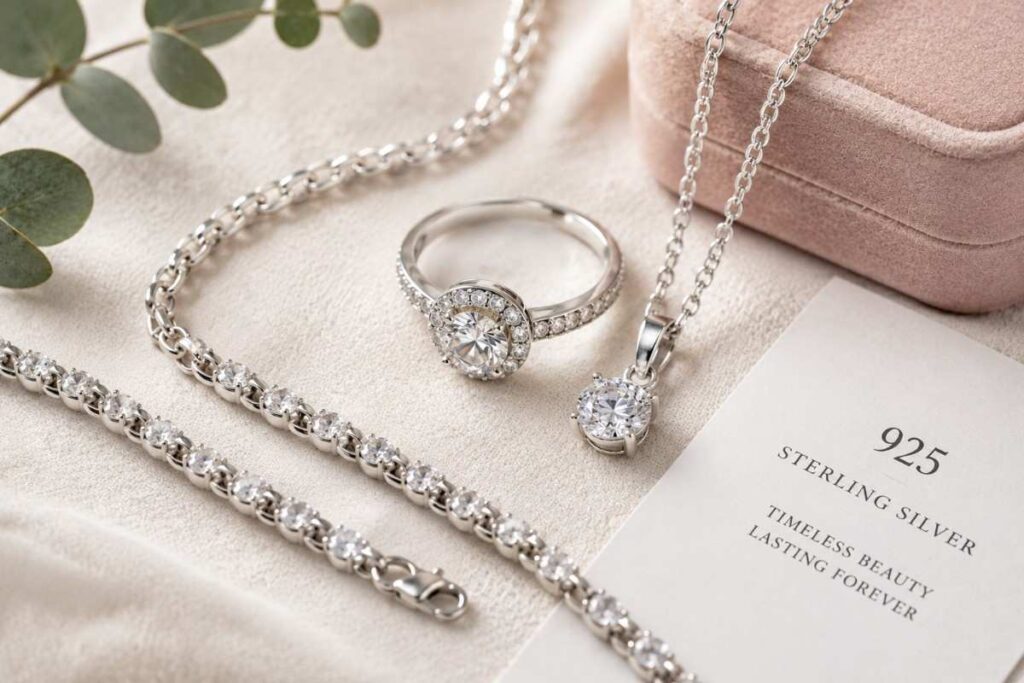
Sterling silver, commonly known as 925 silver, is the most popular type of silver used in jewelry worldwide. It consists of 92.5% pure silver and 7.5% alloy metals, usually copper.
The addition of alloy metals significantly improves the metal’s strength without compromising its attractive silver appearance. This balance between purity and durability makes sterling silver ideal for everyday jewelry, including rings, necklaces, earrings, bracelets, and pendants.
Benefits of sterling silver include:
- Excellent durability for daily wear
- More resistant to bending than pure silver
- Easier to maintain and polish
- Affordable compared to gold and platinum
- Suitable for intricate jewelry designs
Because of its strength and versatility, sterling silver has become the industry standard for high-quality silver jewelry.
What Is 950 Silver?
950 silver contains 95% pure silver and 5% alloy metals, making it purer than standard sterling silver. It is often marked with a “950” hallmark to indicate its silver content.
The higher silver concentration gives 950 silver a brighter appearance and a more luxurious feel. Many premium jewelers and artisans prefer 950 silver for high-end jewelry collections because of its enhanced purity and elegant finish.
Common applications of 950 silver include:
- Luxury rings and wedding bands
- Designer jewelry collections
- Handcrafted artisan pieces
- Premium necklaces and pendants
- Fine jewelry with gemstones
While 950 silver offers greater purity, it is slightly softer than 925 sterling silver. As a result, it may require a bit more care when used for jewelry that experiences frequent daily wear. However, many buyers appreciate its richer silver content and premium appeal.
Understanding the differences between pure silver, sterling silver, and 950 silver can help you choose jewelry that best matches your lifestyle, budget, and long-term durability expectations.
Why Silver Jewelry Lasts a Lifetime
Silver has been valued for centuries not only for its beauty but also for its remarkable longevity. Unlike many fashion jewelry materials that deteriorate over time, genuine silver jewelry can remain beautiful and wearable for decades—or even generations—when properly cared for.
The reason silver jewelry lasts so long comes down to the unique properties of the metal itself. High-quality silver, such as 925 sterling silver and 950 silver, is a precious metal that can withstand years of wear while maintaining its appearance and value.
Precious Metal Composition
Unlike costume jewelry, genuine silver is a precious metal rather than a surface coating. This means the silver exists throughout the entire piece instead of being applied as a thin layer that can wear away over time.
Does Not Peel or Chip
One of the biggest advantages of solid silver jewelry is that it does not peel, flake, or chip like plated jewelry. Since the metal extends through the entire piece, normal wear will not expose a different base metal underneath.
Can Be Repaired
Silver is highly workable, allowing professional jewelers to resize rings, repair broken chains, restore damaged settings, and fix scratches. This repairability significantly extends the lifespan of silver jewelry.
Can Be Polished Repeatedly
Over time, silver may develop tarnish due to exposure to air and moisture. However, tarnish affects only the surface and can usually be removed through proper cleaning and polishing. Even older silver jewelry can often regain its original shine.
Retains Intrinsic Value
Unlike many fashion jewelry materials, silver has inherent market value because it is a precious metal. This means your jewelry retains material value even after years of ownership.
Highly Recyclable
Silver can be melted, refined, and reused without losing its quality. This sustainability contributes to its long-term value and popularity among jewelry buyers.
In short, silver jewelry lasts a lifetime because it combines durability, repairability, timeless beauty, and lasting value—qualities that many other jewelry materials cannot offer.
✨ 5 Reasons Silver Jewelry Lasts a Lifetime ✨
Solid Precious Metal
Repairable
Tarnish Is Reversible
Timeless Design
Retains Value
How Long Does Silver Jewelry Really Last?
The lifespan of jewelry depends largely on its materials, craftsmanship, and how well it is maintained. While fashion jewelry may need replacing every few years, genuine silver jewelry can remain in excellent condition for decades.
Average Lifespan of Different Jewelry Types
| Jewelry Type | Average Lifespan |
|---|---|
| Silver-Plated Jewelry | 6 Months – 3 Years |
| Fashion Jewelry | 1 – 5 Years |
| 925 Sterling Silver | Several Decades |
| 950 Silver | Decades to Lifetime |
Although silver-plated jewelry may initially look similar to genuine silver, its thin coating eventually wears away. In contrast, sterling silver and 950 silver maintain their structure because the entire piece contains silver rather than just the surface.
Factors That Affect the Lifespan of Silver Jewelry
Frequency of Wear
Jewelry worn every day naturally experiences more friction and exposure than pieces reserved for special occasions. However, high-quality silver is designed to withstand regular use.
Storage Conditions
Proper storage can dramatically extend the lifespan of silver jewelry. Keeping pieces in anti-tarnish pouches or airtight containers helps reduce exposure to moisture and air.
Exposure to Chemicals
Perfumes, lotions, cleaning products, chlorine, and household chemicals can accelerate tarnish and affect the appearance of silver. Removing jewelry before exposure helps preserve its finish.
Cleaning Habits
Regular cleaning prevents dirt, oils, and tarnish from building up. Gentle maintenance helps silver retain its shine and prevents the need for aggressive cleaning methods later.
With proper care, many sterling silver and 950 silver pieces are passed down through generations, making silver one of the few jewelry materials that can genuinely last a lifetime.
925 Silver vs 950 Silver – Which Lasts Longer?
Both 925 sterling silver and 950 silver are excellent choices for high-quality jewelry, but they differ slightly in purity, durability, and everyday performance. While 950 silver contains more pure silver, 925 sterling silver is generally more durable because it contains a higher percentage of strengthening alloy metals.
For most people, 925 sterling silver is the better choice for rings, bracelets, and jewelry worn daily. However, buyers seeking higher silver content and a more luxurious appearance often prefer 950 silver.
925 Silver vs 950 Silver Comparison
| Feature | 925 Silver | 950 Silver |
|---|---|---|
| Silver Content | 92.5% | 95% |
| Durability | ⭐⭐⭐⭐⭐ Higher | ⭐⭐⭐⭐ Slightly Softer |
| Purity | Excellent | Higher |
| Tarnish Resistance | Good | Better |
| Price | Lower | Higher |
| Everyday Wear | ⭐ Excellent | ⭐ Very Good |
Which Silver Is Better for Long-Term Wear?
If your primary goal is durability, 925 sterling silver generally lasts longer under daily wear conditions because its additional alloy content improves hardness and scratch resistance. On the other hand, 950 silver offers greater purity and a brighter appearance, making it popular for premium and artisan jewelry.
💎 Still Deciding Between 925 and 950 Silver?
Learn the differences in purity, durability, pricing, and everyday wear before making your purchase.
Compare 950 vs 925 Silver Which Is Better for Jewelry?Silver Jewelry vs Silver-Plated Jewelry
Many shoppers assume silver-plated jewelry offers the same benefits as genuine silver jewelry. While they may look similar initially, their longevity, value, and durability are very different.
Solid silver jewelry contains silver throughout the entire piece, whereas silver-plated jewelry consists of a thin layer of silver applied over a base metal such as brass, copper, or nickel.
Solid Silver vs Silver-Plated Jewelry
| Feature | Solid Silver | Silver-Plated |
|---|---|---|
| Lifespan | Decades | Few Years |
| Repairable | ✅ Yes | ⚠️ Limited |
| Value Retention | High | Low |
| Tarnish Removal | Easy | Difficult |
| Investment Value | ✅ Yes | ❌ No |
Key Takeaway: Solid silver jewelry can last for decades or even a lifetime, while silver-plated jewelry often shows wear after a few years because the thin silver coating eventually wears away.
Which One Lasts Longer?
Solid silver jewelry can last for decades or even a lifetime, while silver-plated jewelry often shows wear after a few years because the thin silver coating eventually wears away.
Once the plating begins to fade, the underlying base metal becomes visible, reducing both appearance and value. In contrast, genuine silver jewelry can be cleaned, polished, repaired, and restored repeatedly, making it a far better long-term investment for most jewelry buyers.
What Makes Silver So Durable?
Silver has been used for jewelry, coins, and decorative items for thousands of years because of its exceptional combination of beauty, strength, and longevity. While many jewelry materials deteriorate with age, genuine silver can remain in excellent condition for decades when properly cared for. Its durability comes from several unique characteristics that make it one of the most reliable precious metals available.
Precious Metal Structure
Unlike plated or costume jewelry, silver is a genuine precious metal. In high-quality pieces such as 925 sterling silver and 950 silver, the silver exists throughout the entire item rather than being applied as a surface coating.
Because the metal runs through the entire piece, normal wear will not cause the finish to peel, flake, or expose a different material underneath. This solid construction is one of the main reasons silver jewelry can remain beautiful for generations.
Resistance to Corrosion
Silver is naturally resistant to corrosion compared to many base metals. While it may develop tarnish when exposed to sulfur compounds in the air, tarnish only affects the surface layer and does not damage the metal itself.
Unlike rust on iron, which can permanently weaken the material, silver tarnish is reversible and can usually be removed through proper cleaning and polishing. This helps preserve the structural integrity of silver jewelry over time.
Easy Restoration
One of silver’s greatest advantages is its ability to be restored. Even jewelry that has become dull, scratched, or heavily tarnished can often be brought back to its original shine.
Professional polishing, cleaning, and refinishing can dramatically improve the appearance of older silver pieces, allowing them to look nearly new again. This restorability significantly extends the lifespan of silver jewelry compared to many other materials.
Ability to Be Repaired
Silver is highly workable, making it easier for jewelers to repair than many alternative metals. Damaged chains, worn settings, bent rings, and minor structural issues can often be fixed without replacing the entire piece.
This repairability means that silver jewelry can continue to be worn and enjoyed for many years, even after experiencing normal wear and tear.
Recyclability
Silver is one of the most recyclable precious metals in the world. It can be melted, refined, and reused without losing its quality or purity.
This characteristic not only makes silver environmentally friendly but also helps maintain its long-term value. Many vintage silver pieces are recycled and transformed into new jewelry while retaining the same precious metal content.
Together, these qualities make silver one of the most durable, sustainable, and long-lasting materials used in modern jewelry.
Can Silver Jewelry Be Repaired and Restored?
Yes, one of the biggest advantages of silver jewelry is that it can be repaired, restored, and refinished even after years of use. Unlike many fashion jewelry materials that are difficult or impossible to fix, genuine silver can often be returned to excellent condition by a skilled jeweler.
Whether your jewelry has become scratched, tarnished, damaged, or no longer fits properly, professional restoration can help extend its lifespan and preserve its beauty.
Common Silver Jewelry Repairs
Ring Resizing
Over time, finger sizes can change due to age, temperature, or lifestyle factors. Fortunately, most sterling silver and 950 silver rings can be resized by professional jewelers, allowing you to continue wearing your favorite pieces comfortably.
Chain Repair
Broken chains are among the most common jewelry issues. Silver chains can often be soldered, repaired, or have damaged links replaced, restoring both strength and appearance.
Stone Replacement
If a gemstone falls out of a silver ring, pendant, or bracelet, a jeweler can usually replace the missing stone and repair the setting. This helps preserve the value and appearance of the jewelry.
Scratch Removal
Daily wear can eventually cause minor scratches on silver jewelry. Professional polishing can remove many surface imperfections and restore the smooth, reflective finish that silver is known for.
Professional Polishing
Over time, silver jewelry may lose some of its original brilliance due to tarnish, dirt, and everyday wear. Professional polishing removes tarnish and restores the bright shine that makes silver so attractive.
Quick Answer
Can damaged silver jewelry be restored?
Yes. Most silver jewelry can be repaired, resized, polished, and restored by professional jewelers, helping it remain wearable and beautiful for many decades. This ability to be renewed is one of the main reasons silver is considered a lifetime jewelry metal.
Does Silver Tarnish Over Time?
Yes, silver jewelry can tarnish over time, but this is a completely natural process and does not mean the jewelry is damaged. Tarnish occurs when silver reacts with substances in the environment, creating a thin dark layer on the surface. The good news is that tarnish is usually easy to remove and does not affect the underlying metal.
In fact, the ability to restore tarnished silver is one of the reasons high-quality silver jewelry can last for decades or even a lifetime.
Why Tarnish Happens
Sulfur Exposure
The primary cause of silver tarnish is sulfur. Sulfur compounds found in the air react with silver and create silver sulfide, which appears as a dark or dull coating on the surface.
Air Pollution
Pollutants in the environment can accelerate tarnishing, particularly in urban and industrial areas where airborne chemicals are more common.
Humidity
Moisture in the air can speed up chemical reactions that contribute to tarnish. Jewelry stored in humid environments may tarnish more quickly than pieces kept in dry conditions.
Important Point
Unlike rust on iron, tarnish is not permanent damage. It only affects the surface of the silver and can usually be removed through proper cleaning, polishing, or professional restoration.
How Tarnish Forms and Is Removed
✨ Silver Tarnish Process ✨
⬇️
🌬️ Exposure to Air
⬇️
⚫ Tarnish Forms
⬇️
🧼 Cleaning & Polishing
⬇️
✨ Original Shine Returns
How to Prevent Silver Jewelry From Tarnishing
While tarnish is normal, proper care can significantly slow the process and help your jewelry maintain its shine for longer.
✨ Keep Your Silver Looking Brand New
Tarnish is normal, but the right cleaning methods can restore your jewelry’s original shine in minutes.
Proper Storage
Store silver jewelry in a cool, dry place away from direct sunlight and moisture. Airtight containers or jewelry boxes help reduce exposure to air and humidity.
Wear It Regularly
Interestingly, wearing silver jewelry often can help reduce tarnish buildup. Natural skin oils may help keep the surface cleaner than jewelry left unused for long periods.
Avoid Chemicals
Remove silver jewelry before swimming, cleaning, applying perfume, lotion, hairspray, or using household chemicals. These substances can accelerate tarnish and affect the metal’s appearance.
Clean Gently
Regular cleaning with a soft polishing cloth helps remove dirt, oils, and early signs of tarnish before they become more noticeable.
Use Anti-Tarnish Pouches
Anti-tarnish bags and pouches are specifically designed to reduce exposure to sulfur and moisture, helping silver jewelry stay bright for longer periods.
Signs of High-Quality Silver Jewelry
Not all silver jewelry is created equal. Knowing what to look for can help you identify authentic, well-crafted pieces that are more likely to last for years.
✔ Silver Jewelry Quality Checklist
- ✅ Hallmarked 925 or 950
- ✅ Smooth, polished finishing
- ✅ Secure clasps and fastenings
- ✅ High-quality craftsmanship
- ✅ Purchased from a trusted seller
- ✅ Includes an authenticity certificate when available
When these factors are present, you can feel more confident that you’re investing in genuine silver jewelry with long-term durability and value.
Is Silver Jewelry Worth Buying?
For many jewelry buyers, silver offers one of the best combinations of beauty, affordability, and long-term value. It provides the elegance of a precious metal without the significantly higher cost associated with gold or platinum.
Whether you’re shopping for everyday accessories, special occasion pieces, or gifts, silver jewelry remains a practical and timeless choice.
Benefits of Silver Jewelry
Affordable Luxury
Silver allows buyers to enjoy genuine precious metal jewelry at a more accessible price point than gold.
Timeless Style
Silver’s bright, neutral appearance complements almost every fashion style and remains popular regardless of changing trends.
Long Lifespan
High-quality sterling silver and 950 silver jewelry can last for decades with proper care.
Precious Metal Value
Unlike costume jewelry, silver retains intrinsic value because it is a recognized precious metal.
Easy Maintenance
Silver jewelry can be cleaned, polished, repaired, and restored, helping it maintain its beauty over time.
Silver vs Gold vs Stainless Steel
Silver vs Gold vs Stainless Steel
| Metal | Cost | Durability | Value |
|---|---|---|---|
| Silver | Moderate | High | High |
| Gold | High | Very High | Very High |
| Stainless Steel | Low | High | Low |
For buyers seeking a balance between affordability, durability, elegance, and long-term value, silver jewelry remains one of the best investments in the jewelry market.
How to Care for Silver Jewelry So It Lasts Generations
One of the biggest advantages of silver jewelry is its ability to last for decades—or even generations—when properly maintained. While silver naturally develops tarnish over time, regular care can keep it looking beautiful and help preserve both its appearance and value.
Following a simple maintenance routine can dramatically extend the lifespan of your silver jewelry.
Daily Care
Small habits make a big difference when it comes to preserving silver jewelry.
- Remove jewelry before swimming or bathing.
- Avoid direct contact with perfumes, lotions, and hairsprays.
- Take off rings and bracelets during heavy physical activities.
- Wipe jewelry with a soft microfiber cloth after wearing to remove oils and moisture.
These simple steps help reduce tarnish buildup and minimize unnecessary wear.
Weekly Care
A quick weekly inspection and cleaning routine can keep your jewelry in excellent condition.
- Check clasps and stone settings for security.
- Gently wipe jewelry with a silver polishing cloth.
- Remove fingerprints and surface dirt before storing.
Regular attention prevents small issues from becoming costly repairs later.
Monthly Care
Once a month, give your silver jewelry a more thorough cleaning.
- Wash with mild soap and warm water.
- Use a soft-bristled toothbrush for intricate details.
- Dry completely before storing.
- Inspect for scratches, loose stones, or signs of damage.
Monthly maintenance helps restore shine and prevent tarnish from becoming more noticeable.
Long-Term Storage
Proper storage is one of the most effective ways to preserve silver jewelry.
- Store pieces individually to prevent scratching.
- Use anti-tarnish pouches or cloth bags.
- Keep jewelry in a cool, dry location.
- Avoid humid environments such as bathrooms.
- Use silica gel packets to help control moisture.
Proper storage significantly slows the tarnishing process and helps maintain the jewelry’s original finish.
Helpful Silver Care Guides
For detailed cleaning instructions, explore these related guides:
👉 How to Clean a Sterling Silver Chain That Has Turned Black
👉 How to Clean Sterling Silver Rings with Cubic Zirconia
Together, these care practices can help your silver jewelry remain beautiful enough to be passed down through future generations.
Common Myths About Silver Jewelry
Silver jewelry has been around for thousands of years, yet several misconceptions still prevent buyers from appreciating its true value and durability. Let’s separate fact from fiction.
Myth #1: Silver Is Not Durable
Reality: High-quality silver jewelry, especially 925 sterling silver and 950 silver, is extremely durable. Many antique silver pieces have survived for generations and remain wearable today.
While pure silver is relatively soft, sterling silver is specifically designed to provide the ideal balance between purity and strength.
Myth #2: Tarnish Means Damage
Reality: Tarnish is a natural surface reaction and does not permanently damage silver.
Unlike rust, which can weaken metal, silver tarnish can typically be removed through cleaning and polishing, restoring the jewelry’s original shine.
Myth #3: Silver Is Cheap Quality
Reality: Silver is a genuine precious metal with intrinsic value.
Although it is more affordable than gold or platinum, silver is widely used in luxury jewelry, designer collections, and heirloom-quality pieces around the world.
Myth #4: Silver Cannot Be Repaired
Reality: Silver is one of the most repairable jewelry metals available.
Professional jewelers can often:
- Resize silver rings
- Repair broken chains
- Replace gemstones
- Remove scratches
- Restore tarnished surfaces
This repairability is one reason silver jewelry can last a lifetime.
Myth #5: All Silver Jewelry Is the Same
Reality: Silver jewelry varies significantly in purity, craftsmanship, and quality.
Examples include:
- 800 Silver
- 900 Silver
- 925 Sterling Silver
- 950 Silver
- 999 Fine Silver
The quality of construction, hallmarks, craftsmanship, and materials used all affect durability and value.
Final Thoughts
Silver remains one of the few jewelry materials that can genuinely last a lifetime. Unlike fashion jewelry and silver-plated pieces that eventually wear out, high-quality silver jewelry is designed to endure years of daily wear while retaining its beauty, value, and charm.
Whether you choose 925 sterling silver for its exceptional durability or 950 silver for its higher purity and premium appeal, both options offer the longevity that many jewelry buyers seek. With proper care, regular cleaning, and occasional professional polishing, silver jewelry can continue to shine for decades and often becomes a treasured heirloom passed down through generations.
One of silver’s greatest advantages is its ability to be repaired and restored. Scratches can be polished away, tarnish can be removed, broken chains can be repaired, and rings can often be resized. This makes solid silver jewelry a far better long-term investment than plated alternatives, which cannot usually be restored once the plating wears away.
If you’re looking for jewelry that combines timeless elegance, everyday wearability, lasting durability, and genuine precious metal value, silver remains one of the smartest choices available.
Become a Silver Jewelry Expert
Want to learn more about silver purity, authenticity, hallmarks, and buying genuine sterling silver jewelry? Explore our most popular guides trusted by silver jewelry buyers.
Frequently Asked Questions
Does silver jewelry last forever?
Silver jewelry can potentially last a lifetime or longer when made from high-quality silver such as 925 sterling silver or 950 silver and properly maintained. While silver may tarnish over time, it does not peel or wear away like plated jewelry and can be cleaned, repaired, and restored repeatedly.
How long does 925 silver jewelry last?
925 sterling silver jewelry can last for several decades and often becomes a family heirloom. Its lifespan depends on factors such as wear frequency, storage conditions, exposure to chemicals, and regular maintenance. With proper care, many sterling silver pieces remain beautiful for generations.
Is 950 silver better than 925 silver?
950 silver contains more pure silver (95%) than 925 sterling silver (92.5%), making it slightly purer and often more valuable. However, 925 silver is generally more durable for everyday wear because it contains a higher percentage of strengthening alloy metals. The better choice depends on whether you prioritize purity or durability.
Can tarnished silver become shiny again?
Yes. Tarnished silver can usually regain its original shine through proper cleaning and polishing. Tarnish affects only the surface layer of the metal and is not permanent damage. In most cases, a silver polishing cloth or professional cleaning can restore the jewelry’s appearance.
Does silver lose value over time?
Silver generally retains intrinsic value because it is a precious metal traded globally. While market prices fluctuate, genuine silver jewelry typically holds more value than fashion jewelry or plated jewelry due to its silver content and recyclability.
Is silver jewelry a good investment?
Silver jewelry can be a worthwhile purchase because it combines beauty, durability, and precious metal value. While jewelry should not be viewed solely as an investment asset, high-quality silver pieces often retain value better than costume jewelry and can remain wearable for decades.
Can silver jewelry be repaired?
Yes. Silver is one of the easiest precious metals to repair. Professional jewelers can resize rings, repair chains, replace gemstones, remove scratches, and restore tarnished surfaces. This repairability is one reason silver jewelry can last a lifetime.
How often should silver jewelry be cleaned?
Silver jewelry should be gently wiped after regular wear and thoroughly cleaned approximately once a month. Jewelry worn daily or exposed to lotions, perfumes, or moisture may require more frequent cleaning to prevent tarnish buildup and maintain its shine.
Does silver jewelry last forever?
Silver jewelry can potentially last a lifetime or longer when made from high-quality silver such as 925 sterling silver or 950 silver and properly maintained. While silver may tarnish over time, it does not peel or wear away like plated jewelry and can be cleaned, repaired, and restored repeatedly.
How long does 925 silver jewelry last?
925 sterling silver jewelry can last for several decades and often becomes a family heirloom. Its lifespan depends on factors such as wear frequency, storage conditions, exposure to chemicals, and regular maintenance. With proper care, many sterling silver pieces remain beautiful for generations.
Is 950 silver better than 925 silver?
950 silver contains more pure silver (95%) than 925 sterling silver (92.5%), making it slightly purer and often more valuable. However, 925 silver is generally more durable for everyday wear because it contains a higher percentage of strengthening alloy metals. The better choice depends on whether you prioritize purity or durability.
Can tarnished silver become shiny again?
Yes. Tarnished silver can usually regain its original shine through proper cleaning and polishing. Tarnish affects only the surface layer of the metal and is not permanent damage. In most cases, a silver polishing cloth or professional cleaning can restore the jewelry’s appearance.
Does silver lose value over time?
Silver generally retains intrinsic value because it is a precious metal traded globally. While market prices fluctuate, genuine silver jewelry typically holds more value than fashion jewelry or plated jewelry due to its silver content and recyclability.
Is silver jewelry a good investment?
Silver jewelry can be a worthwhile purchase because it combines beauty, durability, and precious metal value. While jewelry should not be viewed solely as an investment asset, high-quality silver pieces often retain value better than costume jewelry and can remain wearable for decades.
Can silver jewelry be repaired?
Yes. Silver is one of the easiest precious metals to repair. Professional jewelers can resize rings, repair chains, replace gemstones, remove scratches, and restore tarnished surfaces. This repairability is one reason silver jewelry can last a lifetime.
How often should silver jewelry be cleaned?
Silver jewelry should be gently wiped after regular wear and thoroughly cleaned approximately once a month. Jewelry worn daily or exposed to lotions, perfumes, or moisture may require more frequent cleaning to prevent tarnish buildup and maintain its shine.
Can you shower with silver jewelry?
Occasional exposure to water is unlikely to damage genuine silver jewelry, but frequent showering can accelerate tarnish due to soap residue, minerals, and moisture. Removing silver jewelry before showering helps preserve its shine and reduce cleaning requirements.
Does silver jewelry rust or corrode?
No. Silver does not rust because rust is a form of iron oxidation. However, silver can tarnish when it reacts with sulfur compounds in the air. Unlike rust, tarnish is usually removable and does not permanently damage the metal.
What is the difference between sterling silver and pure silver?
Pure silver, also called 999 silver, contains 99.9% silver and is relatively soft. Sterling silver contains 92.5% silver and 7.5% alloy metals, making it stronger and more suitable for everyday jewelry. This added durability is why sterling silver is the industry standard for most silver jewelry.
How do I know if my silver jewelry is real?
Look for hallmarks such as 925, Sterling, S925, 950, or 999. Genuine silver jewelry should also have a smooth finish, quality craftsmanship, and be purchased from a reputable seller. For complete certainty, professional testing can verify silver authenticity.
Why does silver jewelry turn black?
Silver jewelry turns black because of tarnish, which occurs when silver reacts with sulfur compounds, humidity, and environmental pollutants. This dark layer forms only on the surface and can usually be removed through proper cleaning and polishing.
Is sterling silver suitable for everyday wear?
Yes. Sterling silver is specifically designed for regular use. Its combination of 92.5% silver and strengthening alloys makes it durable enough for everyday rings, necklaces, bracelets, and earrings while maintaining the beauty of genuine silver.
Can silver jewelry be passed down through generations?
Absolutely. One of the reasons silver jewelry is so highly valued is its longevity. With proper care, cleaning, and occasional restoration, silver jewelry can remain beautiful and wearable for multiple generations.
Which lasts longer, silver or stainless steel?
Stainless steel is generally more resistant to scratches and corrosion, but silver offers greater long-term value because it is a precious metal that can be repaired, restored, and refinished. High-quality silver jewelry can last just as long as stainless steel while retaining intrinsic value.