
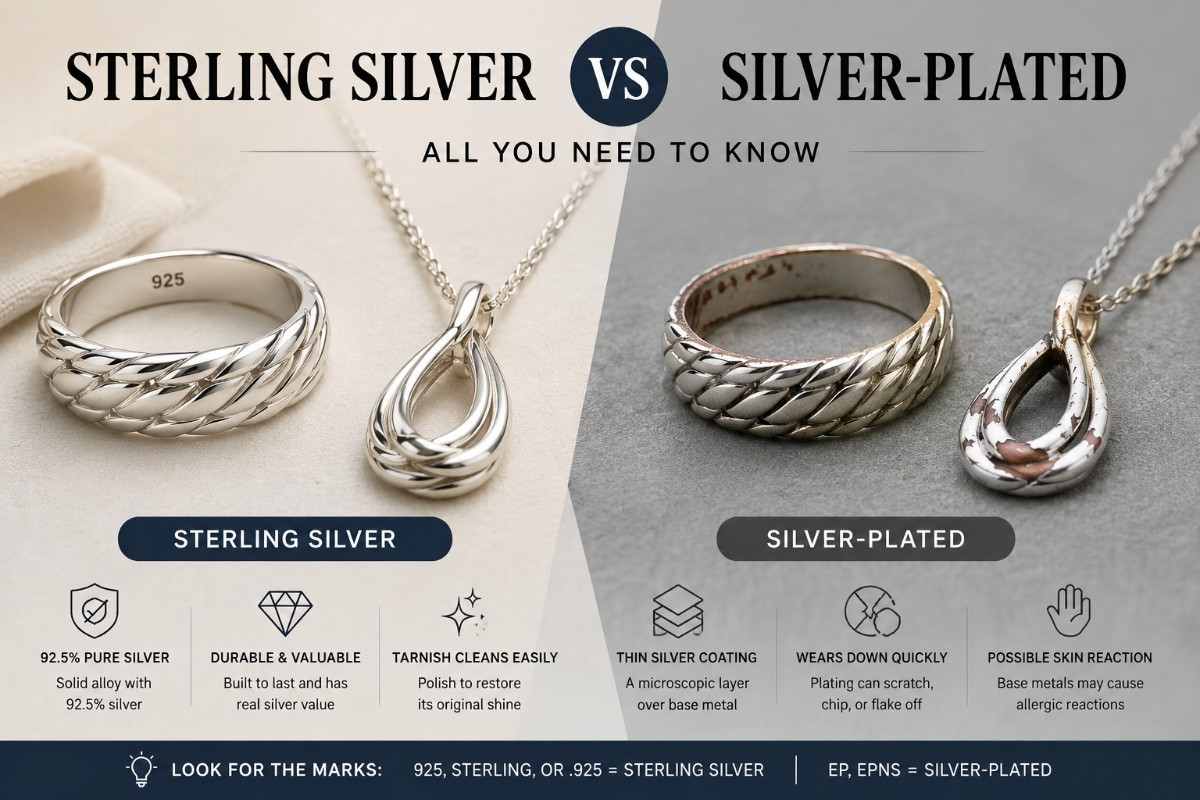
Sterling silver and silver-plated jewelry can look almost identical when you first see them, but they are very different in terms of composition, durability, value, and how they age.
The main difference is simple: sterling silver is made from a solid silver alloy, while silver-plated jewelry has only a thin layer of silver over another metal.
Sterling silver contains 92.5% pure silver and 7.5% other metals, usually copper. Silver-plated jewelry, on the other hand, is usually made from a less expensive base metal such as copper, brass, or nickel and then covered with a thin layer of silver.
That difference matters, especially if you’re buying jewelry you want to wear regularly.
Sterling Silver vs Silver-Plated Jewelry
| Feature | Sterling Silver | Silver-Plated |
|---|---|---|
| Composition | 92.5% silver + 7.5% other metals | Base metal with a thin silver coating |
| Silver content | Throughout the piece | Only on the outer surface |
| Common marks | 925, .925, Sterling | EP, EPNS and other plating marks |
| Durability | Suitable for regular wear | Plating can wear away over time |
| Tarnishing | Can tarnish but can be polished | Can tarnish and eventually lose its coating |
| Value | Has precious-metal value | Usually has very little silver/scrap value |
| Lifespan | Can last for many years with proper care | Depends on plating quality and how it is worn |
| Price | Generally more expensive | Generally more affordable |
Read More – What Is 950 Silver? Fine Jewelry Explained
What Is the Difference Between Sterling Silver and Silver-Plated Jewelry?
Sterling silver is a solid silver alloy, meaning the 92.5% silver content runs throughout the piece.
Pure silver is too soft for many types of everyday jewelry, so it is mixed with other metals, usually copper, to improve its strength and durability. This is why sterling silver is commonly used to make rings, necklaces, earrings, bracelets, and chains.
Silver-plated jewelry is different. The jewelry itself is made from a base metal, and only the outside is covered with a thin layer of silver.
Think of it this way:
Sterling silver: 92.5% silver throughout the piece.
Silver-plated: Base metal underneath + thin silver coating on the surface.
A new silver-plated piece can look just like sterling silver, but the difference becomes more noticeable as the jewelry is worn.
Read in Detail – What Is Sterling Silver? Purity, Benefits, Uses & Care
Which Has More Value?
Sterling silver has considerably more material value because the piece contains a substantial amount of real silver.
Since sterling silver is 92.5% silver, it has precious-metal and melt value. This doesn’t mean you will always receive the full silver value when reselling a piece. Design, craftsmanship, brand, gemstones, condition, and market demand also affect its resale price.
Silver-plated jewelry contains only a very small amount of silver because the silver exists primarily as a thin surface coating. As a result, it generally has little scrap or resale value based on its silver content.
If you’re buying jewelry as a long-term piece, this is an important difference to keep in mind.
Read – What Is 950 Silver? Complete Guide to Purity, Value, Durability, Hallmarks & Jewelry Buying
Which Lasts Longer?
Sterling silver generally lasts much longer than silver-plated jewelry.
Sterling silver can handle regular wear and can be polished repeatedly to remove tarnish and restore its shine. Since the silver alloy extends throughout the piece, normal polishing doesn’t eventually reveal a completely different metal underneath.
Silver plating, however, can wear away.
Repeated friction from wearing a ring, bracelet, necklace, or chain can gradually remove the thin silver coating. Scratching, moisture, chemicals, and aggressive cleaning can also accelerate the process.
Once the plating becomes thin enough, you may begin to see the base metal underneath. Depending on the base metal, it may look darker, yellowish, or copper-colored.
This is one of the biggest disadvantages of silver-plated jewelry: once the silver coating has worn away, polishing cannot bring it back. The piece may need to be professionally replated.
Read Full Blog – Why Silver Jewelry Lasts a Lifetime: 925 vs 950 Silver, Durability, Value & Care Guide
What About Tarnishing?
Both sterling silver and silver-plated jewelry can tarnish.
Sterling silver naturally reacts with substances in the environment and can develop a darker or duller appearance over time. Humidity, sweat, cosmetics, perfumes, and chemicals can speed up tarnishing.
The good thing about sterling silver is that tarnish is usually a surface problem. With proper cleaning and polishing, the original shine can be restored.
Silver-plated jewelry can also tarnish, but it has an additional problem. The silver layer can gradually wear away at the same time.
This means there is an important difference between tarnish and worn plating.
If sterling silver becomes dark, cleaning it can restore the surface. If silver plating has completely worn away, cleaning won’t restore the missing silver layer.
Is Sterling Silver Better for Sensitive Skin?
Sterling silver is generally well tolerated by most people, but it isn’t automatically hypoallergenic for everyone.
Because sterling silver contains 7.5% other metals, usually copper, some people may experience a reaction depending on their individual sensitivity.
Silver-plated jewelry can be more unpredictable because the base metal may contain materials such as nickel or brass. If the silver coating becomes thin or wears away, the base metal can come into direct contact with your skin.
Some people may also notice green discoloration on their skin when the underlying metal reacts with sweat or skin chemistry.
So if you have sensitive skin, don’t simply look for the word “silver.” Check exactly what the jewelry is made from and whether the manufacturer provides information about the base metal and plating.
How Can You Tell If Jewelry Is Sterling Silver or Silver-Plated?
The first thing to check is the marking.
Authentic sterling silver jewelry is commonly marked:
- 925
- .925
- Sterling
- Sterling Silver
The number 925 refers to the 92.5% silver content.
Silver-plated items may have markings such as:
- EP – commonly used for electroplated
- EPNS – electroplated nickel silver
However, markings can vary between manufacturers, and a stamp alone shouldn’t be considered absolute proof of authenticity.
If you’re buying an expensive piece, check the seller’s material description and purchase from a reputable source. For valuable or collectible jewelry, professional metal testing can provide greater certainty.
Read – How can you tell if something is sterling silver | 7 Easy Tests That Actually Work
You can also look closely at older jewelry. If a piece has worn areas where the surface looks copper-colored, yellowish, or noticeably different from the rest of the jewelry, it may be plated.
Which Should You Buy?
For jewelry you plan to wear regularly and keep for years, sterling silver is usually the better choice.
It contains significantly more silver, has greater material value, is durable enough for everyday use, and can be polished and maintained throughout its life.
Silver-plated jewelry can still be a good option if you’re looking for an affordable fashion accessory or something you only plan to wear occasionally. It can offer the appearance of silver without the higher cost of sterling silver.
The important thing is to know what you’re paying for.
How to Identify Authentic Sterling Silver Jewelry: A Complete Buyer’s Guide
If a jewelry listing simply says “silver,” don’t assume it means sterling silver. Look for specific information such as 925 sterling silver or silver-plated so you know exactly what you’re buying.
How to Care for Both Types of Jewelry
Sterling silver can last for many years with relatively simple care. Keep it away from unnecessary exposure to perfumes, lotions, household chemicals, chlorine, and excessive moisture. When you’re not wearing it, store it somewhere dry and preferably in an airtight or anti-tarnish jewelry pouch.
Read in Detail – How to prevent 925 sterling silver from tarnishing
For silver-plated jewelry, be even more careful. Avoid abrasive polishing cloths, harsh cleaners, and excessive rubbing because these can remove the silver coating.
Keeping both types of jewelry clean and properly stored can help maintain their appearance, but remember that sterling silver can be polished, while worn-away silver plating cannot simply be polished back.
Sterling Silver vs Silver-Plated: Which Is Better?
If your priority is quality, durability, long-term use, and actual silver content, sterling silver is the clear winner.
Sterling silver contains 92.5% silver throughout the piece, while silver-plated jewelry contains only a thin outer layer of silver over a less expensive base metal.
Silver-plated jewelry can be a practical choice when price is the main consideration, especially for occasional fashion wear. But if you’re looking for a piece that you can wear regularly and keep for years, sterling silver is generally worth the extra cost.
The next time you shop for silver jewelry, don’t judge it only by how shiny it looks. Check the material, look for a 925 or Sterling mark, and make sure you understand whether you’re buying sterling silver or silver-plated jewelry.
Buy Sterling Silver Jewelry Online Without Getting Scammed
Frequently Asked Questions
Is sterling silver better than silver-plated jewelry?
Yes, for most long-term uses. Sterling silver contains 92.5% silver throughout the piece, while silver-plated jewelry has only a thin silver coating over another metal.
Is silver-plated jewelry real silver?
Yes, silver-plated jewelry does contain real silver, but only as a thin outer layer. It is not the same as sterling silver.
Does sterling silver last longer than silver-plated jewelry?
Generally, yes. Sterling silver can be polished and maintained repeatedly, while silver plating can eventually wear away and expose the base metal.
Does sterling silver tarnish?
Yes. Sterling silver can tarnish over time, but the tarnish can usually be removed with proper cleaning and polishing.
Does silver-plated jewelry turn green?
It can, particularly when the silver coating wears thin and the underlying base metal comes into contact with the skin. Some base metals can react with sweat and skin chemistry and cause green discoloration.
What does 925 mean on jewelry?
A 925 mark generally indicates that the jewelry is made from an alloy containing 92.5% silver, which is the standard composition of sterling silver.
Can silver-plated jewelry be polished?
It can be cleaned gently, but aggressive polishing can remove the thin silver coating. Once the plating has worn away, polishing cannot restore it.
Is sterling silver worth more than silver-plated jewelry?
Generally, yes. Sterling silver contains a substantial amount of silver and therefore has precious-metal value, while silver-plated jewelry usually has very little silver value.
Which is better for everyday wear: sterling silver or silver-plated?
Sterling silver is generally the better choice for everyday wear because it is more durable and doesn’t depend on a thin surface coating that can eventually wear away.