
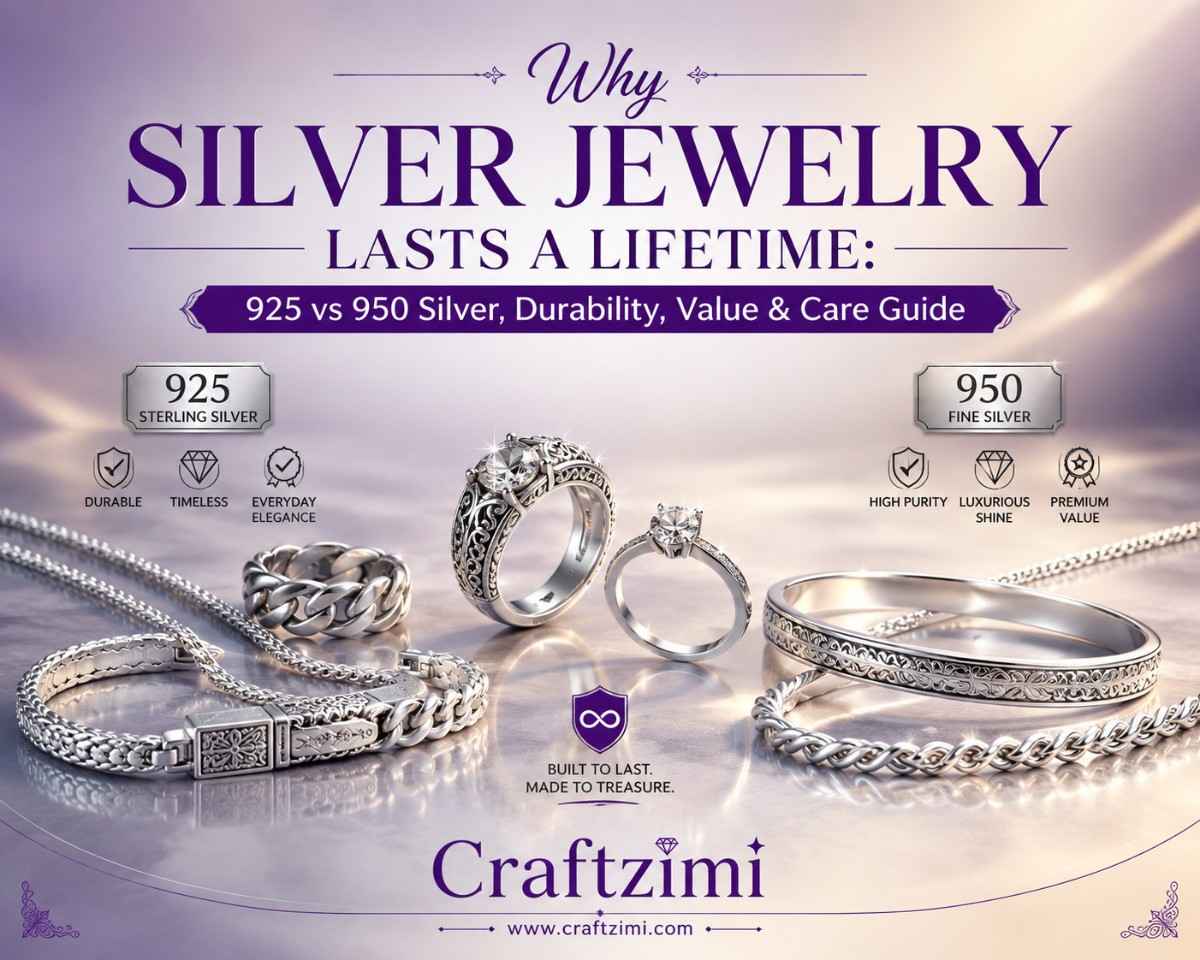
950 silver is a premium silver alloy made from 95% pure silver and 5% other metals, with copper being the most common alloying metal. This composition makes it one of the highest-quality silver alloys used in fine jewelry, offering a balance between the brilliance of pure silver and the strength needed for wearable pieces.
Because of its exceptionally high silver content, 950 silver is often referred to as ultra-fine silver. In some regions, especially South America, it is also known as Peruvian Silver, while in France, it is associated with the Minerva silver standard, a hallmark of high-quality silversmithing.
Unlike 999 fine silver, which is too soft for most jewelry, 950 silver includes a small percentage of alloy metal to improve its durability without sacrificing its luxurious appearance. It is positioned between 925 sterling silver and 999 pure silver, making it an excellent choice for premium handcrafted jewelry.
What Does the “950” Stamp Mean?
If you see a “950” hallmark stamped inside a ring, bracelet, necklace, or other silver item, it indicates that the piece contains 950 parts pure silver out of every 1,000 parts of metal. In other words, the jewelry is made from 95% silver and 5% alloy.
This hallmark is an internationally recognized purity mark that assures buyers they are purchasing genuine high-purity silver rather than silver-plated or low-grade alloys.
Why Is 950 Silver Used in Fine Jewelry?
950 silver is popular among professional jewelers because it combines beauty with workability. Its high silver content produces a naturally bright white finish that requires minimal enhancement, making gemstones and intricate designs stand out beautifully.
The alloy is also more malleable than traditional sterling silver, allowing artisans to create detailed engravings, hand-forged patterns, and unique custom jewelry. For this reason, many luxury and handcrafted jewelry brands prefer 950 silver for premium collections.
If you’re looking for jewelry that offers exceptional purity, timeless elegance, and superior craftsmanship, 950 silver is considered one of the finest silver alloys available. Its combination of beauty, quality, and lasting value makes it a favorite among collectors, jewelry designers, and buyers seeking high-end silver jewelry.
950 Silver vs. 925 Sterling Silver: What’s the Difference?
Although both 950 silver and 925 sterling silver are genuine silver alloys, they differ in purity, durability, appearance, and everyday performance. Understanding these differences can help you choose the right metal based on your lifestyle, budget, and jewelry preferences.
The most noticeable distinction is the silver content. 950 silver contains 95% pure silver, while 925 sterling silver contains 92.5% pure silver. The remaining percentage consists of alloy metals—usually copper—which improve the metal’s strength and make it more suitable for jewelry.
Because 950 silver contains less copper, it has a naturally brighter, whiter appearance that closely resembles pure silver. It also reflects light more effectively, giving jewelry a luxurious shine without requiring additional plating or treatments.
Read our comprehensive guide, “What Is Sterling Silver? Purity, Benefits, Uses & Care,” to learn how sterling silver is made, why it’s valued for its durability and beauty, how it compares to other silver types like 950 silver, and the best ways to care for it so it stays brilliant for years.
950 Silver vs. 925 Sterling Silver Comparison
| Feature | 950 Silver | 925 Sterling Silver |
|---|---|---|
| Pure Silver Content | 95% | 92.5% |
| Alloy Content | 5% | 7.5% |
| Color & Shine | Brighter, whiter, more reflective | Slightly darker silver tone |
| Hardness | Softer and more malleable | Harder and more scratch-resistant |
| Tarnish Resistance | Better due to lower copper content | Tarnishes more quickly |
| Best For | Fine handcrafted jewelry, artisan pieces | Everyday rings, chains, bracelets, earrings, and flatware |
Want to know what makes quality silver jewelry stand the test of time? Read our guide, “Why Silver Jewelry Lasts a Lifetime: 925 vs 950 Silver, Durability, Value & Care Guide,” to learn how 925 sterling silver and 950 silver compare in strength, longevity, value, and maintenance
Key Characteristics of 950 Silver
950 silver is prized for its high purity, brilliant white finish, improved tarnish resistance, and excellent workability, making it a premium choice for fine handcrafted jewelry.
Exceptional Purity
With 95% pure silver, 950 silver offers one of the highest purity levels commonly used in wearable jewelry. This gives it a premium look that closely resembles fine silver while remaining practical for jewelry making.
Brilliant White Finish
One of the biggest advantages of 950 silver is its naturally bright white color. The higher silver content creates a cleaner, more reflective surface than standard sterling silver, making gemstones, diamonds, and intricate details appear even more striking.
Better Tarnish Resistance
Silver naturally reacts with sulfur compounds in the air, causing tarnish over time. However, because 950 silver contains only 5% alloy metal—typically copper—it oxidizes more slowly than 925 sterling silver. While it is not completely tarnish-proof, it generally requires less frequent polishing to maintain its shine.
Softer and Easier to Craft
The higher purity also makes 950 silver slightly softer and more malleable than sterling silver. This allows skilled artisans to create detailed engravings, delicate filigree, and custom-designed jewelry with greater precision. However, this softness also means it may develop scratches or minor dents more easily than 925 sterling silver, making it better suited for carefully worn fine jewelry rather than heavy everyday use.
Where Is 950 Silver Commonly Used?
950 silver is most commonly found in high-end handcrafted jewelry, luxury accessories, and decorative silverware rather than mass-produced jewelry. Its combination of exceptional purity, bright appearance, and excellent workability makes it a preferred choice for skilled silversmiths and artisan jewelry makers.
Many premium pieces bearing the 950 hallmark originate from Taxco, Mexico, a region famous for its centuries-old silversmithing tradition. The hallmark is also widely associated with Peruvian silver jewelry, where local artisans create handcrafted rings, bracelets, necklaces, earrings, and decorative items using this high-purity alloy. In France, 950 silver is recognized under the Minerva standard, a hallmark that represents superior-quality silver craftsmanship.
Because of its softer nature, 950 silver is especially well suited for custom jewelry, engraved designs, statement pieces, and collectible items where artistry is valued as much as the precious metal itself.
Is 950 Silver More Valuable Than 925 Silver?
In most cases, yes. Since 950 silver contains a higher percentage of pure silver, it generally costs more than standard 925 sterling silver. The additional silver content increases its intrinsic metal value, while its premium positioning in the jewelry market often results in higher retail prices.
However, the value of a 950 silver piece depends on more than just its purity. Several factors influence its price, including:
- Silver’s current market price
- Weight of the jewelry
- Craftsmanship and design complexity
- Brand reputation
- Gemstones or other materials used
- Overall condition and rarity
Beautifully handcrafted 950 silver jewelry can command significantly higher prices than machine-made sterling silver pieces because buyers are paying for both the precious metal and the artisan’s expertise.
Is 950 Silver Worth Buying?
If you’re looking for jewelry that offers higher purity, exceptional brilliance, and outstanding craftsmanship, 950 silver is an excellent investment. Its naturally bright finish, improved tarnish resistance, and premium appearance make it a favorite among jewelry enthusiasts who appreciate fine-quality silver.
While it is slightly softer than 925 sterling silver and may require a little more care to prevent scratches, many buyers consider this a worthwhile trade-off for its luxurious appearance and higher silver content.
Not sure how to tell genuine sterling silver from fake or silver-plated jewelry? Read our Sterling Silver Buying Guide to learn the essential hallmarks to look for, simple authenticity checks, common red flags, and expert tips for choosing high-quality 925 silver jewelry. This guide will help you make a smart, informed purchase with confidence.
Whether you’re purchasing a handcrafted ring, elegant necklace, statement bracelet, or collectible silver piece, 950 silver offers lasting beauty and timeless appeal.
Want to know what makes quality silver jewelry stand the test of time? Read our guide, “Why Silver Jewelry Lasts a Lifetime: 925 vs 950 Silver, Durability, Value & Care Guide,” to learn how 925 sterling silver and 950 silver compare in strength, longevity, value, and maintenance.
Final Thoughts
950 silver represents one of the finest silver alloys used in jewelry today. With 95% pure silver, a brilliant white finish, slower tarnishing, and exceptional craftsmanship potential, it stands above standard sterling silver for buyers seeking premium-quality jewelry. If you value purity, elegance, and artisan-made designs, 950 silver is a worthwhile choice that combines beauty with lasting value.
1. Is 950 silver real silver?
Yes, 950 silver is real silver. It contains 95% pure silver and 5% alloy metals, usually copper, to improve strength and durability. The “950” hallmark indicates the metal’s purity.
2. Is 950 silver better than 925 sterling silver?
950 silver is purer than 925 sterling silver because it contains 95% silver instead of 92.5%. It has a brighter appearance and better tarnish resistance, while 925 sterling silver is harder and more suitable for everyday wear.
3. Does 950 silver tarnish?
Yes, 950 silver can tarnish over time, but it tarnishes more slowly than 925 sterling silver because it contains less copper. Proper storage and regular cleaning help keep it looking shiny.
4. Is 950 silver worth more than 925 silver?
Generally, yes. Since 950 silver contains more pure silver, it usually has a higher intrinsic value. However, the final price also depends on craftsmanship, design, brand, and the current silver market price.
5. Is 950 silver good for everyday jewelry?
950 silver can be worn daily, but it is slightly softer than 925 sterling silver. It is best suited for people who appreciate premium jewelry and are willing to take a little extra care to prevent scratches.
6. What does the 950 stamp mean on jewelry?
A 950 stamp means the jewelry is made from 95% pure silver and 5% alloy metals. It is an internationally recognized hallmark that confirms the silver’s purity.
7. Which is more durable, 950 silver or 925 silver?
925 sterling silver is more durable because it contains a higher percentage of alloy metals, making it harder and more resistant to scratches. 950 silver is softer but offers greater purity and a brighter finish.
8. Where is 950 silver commonly used?
950 silver is commonly used for handcrafted jewelry, luxury accessories, artisan silverware, and decorative pieces. It is especially popular in jewelry from Peru, Taxco (Mexico), and France.
9. How do you clean 950 silver jewelry?
Clean 950 silver using warm water, mild dish soap, and a soft microfiber cloth. For tarnish, use a silver polishing cloth or a silver-safe cleaner. Avoid harsh chemicals and abrasive materials that may scratch the surface.
10. Can you shower with 950 silver jewelry?
While you can occasionally shower with 950 silver jewelry, it’s not recommended. Soap, chlorine, and other chemicals can dull its shine over time. Removing your jewelry before bathing helps preserve its finish.
11. Is 950 silver hypoallergenic?
Yes, 950 silver is generally considered hypoallergenic because it contains a high percentage of pure silver and only a small amount of alloy metals. It is often a good choice for people with sensitive skin.
12. How can you tell if 950 silver is genuine?
Check for a “950” hallmark, purchase from reputable jewelers, and request a certificate of authenticity if available. Genuine 950 silver also has a bright white color and feels heavier than silver-plated jewelry.